Is Building Your Own Kitchen Really Cheaper? (We Did the Math)



Digitriserkamal
14 February 2026
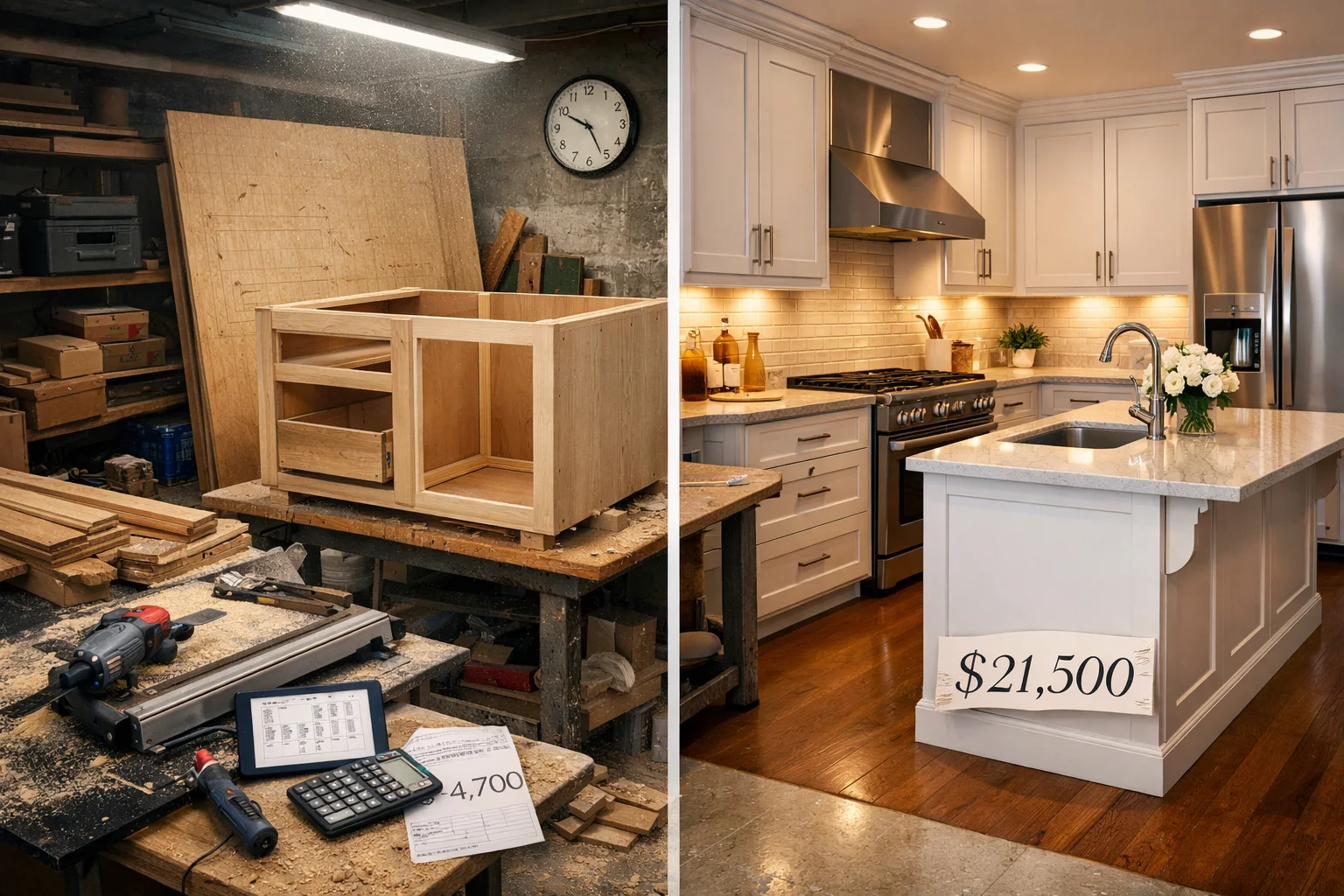
Kitchen renovations rank among the most expensive home improvements. Professional installations easily cost $20,000 to $50,000 or more. This leads many homeowners to consider building your own kitchen as a cost-saving alternative. But does DIY actually save money when you factor in all expenses? We crunched the numbers on materials, tools, time, and hidden costs. The results might surprise you. Whether building your own kitchen makes financial sense depends on several crucial factors. Let’s examine the real math behind this major decision.
Understanding professional costs provides context for DIY savings potential.
Professional kitchen installations include multiple cost components. Cabinets typically consume 40-50% of total budget. Labor costs account for another 20-30%. Countertops, appliances, and fixtures make up the remainder.
For a standard 10×10 kitchen, expect these ranges:
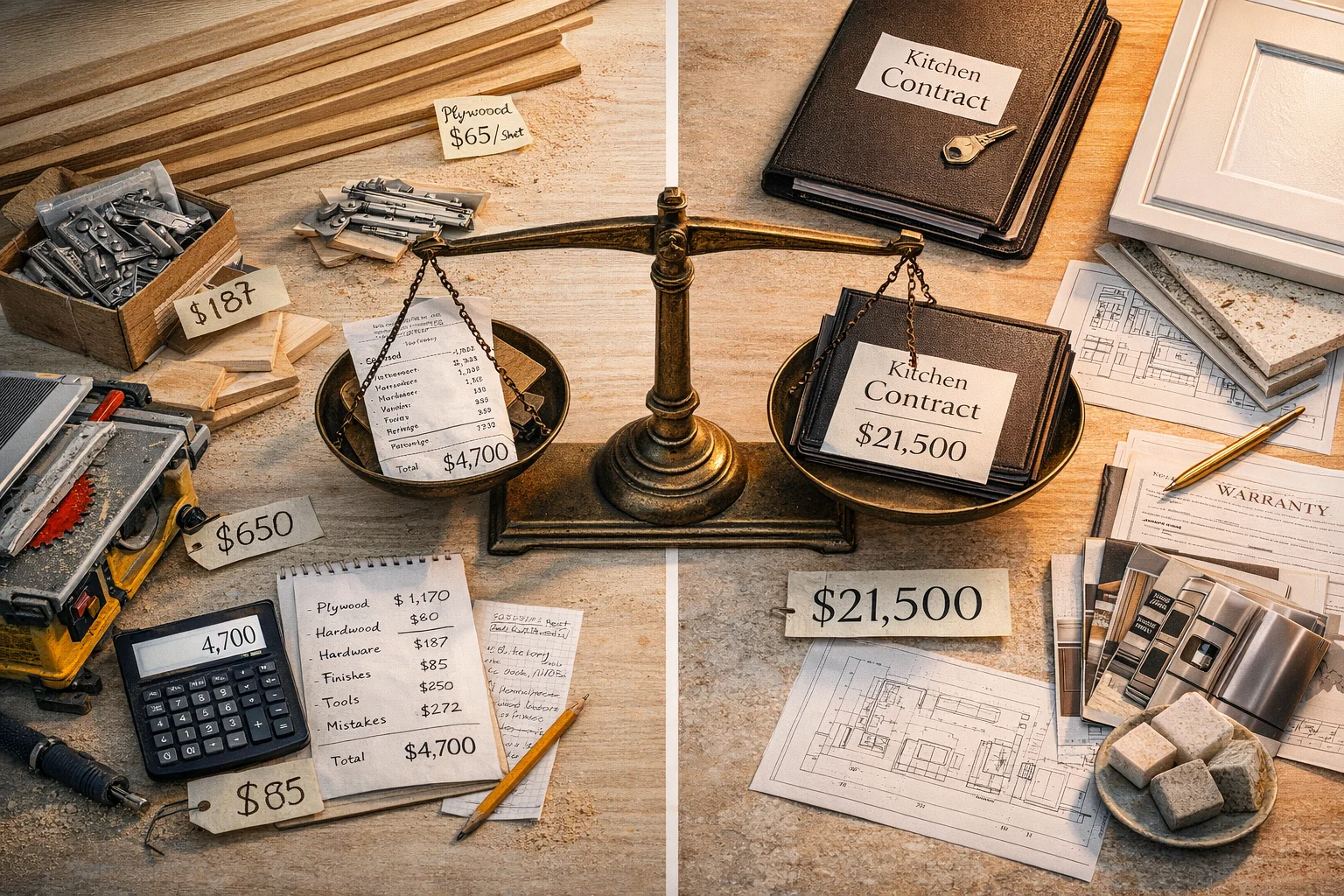
Total professional installation: $12,000-$80,000 depending on quality and customization.
Professional services include design consultation, precise measurements, and expert installation. Contractors handle permits, inspections, and code compliance. They coordinate multiple trades including electricians and plumbers.
Additionally, professionals provide warranties on labor and materials. They troubleshoot problems efficiently using years of experience. Their established supplier relationships often secure better material prices.
These services add real value but come at premium costs. Building your own kitchen eliminates these labor expenses while adding new challenges.
DIY kitchen building involves more expenses than many homeowners anticipate.
Materials represent your largest DIY expense. However, you’ll pay retail prices without contractor discounts.
Essential materials include:
Total material estimate for 10×10 kitchen: $3,250-$11,000
Quality choices significantly impact costs. Plywood grades, wood species, and hardware quality create wide price ranges. Your material decisions determine final budget.
Building your own kitchen requires specific tools. Many homeowners lack these specialized items initially.
Necessary tools include:
Tool investment: $975-$4,000 for quality equipment
However, these tools serve multiple future projects. Amortize costs across various builds to calculate true per-project expense. Consider borrowing or renting specialized tools to reduce upfront costs.
DIY projects invariably encounter unexpected expenses. Plan for additional costs beyond materials and tools.
Common hidden expenses include:
Budget at least 20% contingency for unexpected costs. Building your own kitchen takes longer than anticipated, potentially increasing temporary living expenses.
Your time has real value that impacts true DIY costs.
Professional installations take 1-3 weeks typically. DIY projects extend significantly longer, especially for beginners.
Realistic DIY timelines:
Total time investment: 155-310 hours minimum
This assumes steady progress without major setbacks. Most DIYers work evenings and weekends, stretching projects across 2-4 months.
Assign monetary value to your time for accurate cost comparison. Even if not working, your time has opportunity cost.
Consider what else you could do with 200+ hours. Could you earn money through side work? Would family time provide greater value? Are there other home improvements with better returns?
Calculate conservatively at $20-50 per hour for your time. This adds $3,100-$15,500 to your DIY costs when building your own kitchen.
However, many DIYers enjoy the process and don’t count leisure time. If woodworking is your hobby, time investment becomes a benefit rather than cost.
First-time kitchen builders face steep learning curves. Mistakes extend timelines and increase material waste.
Each error requires:
Experienced woodworkers complete projects 30-50% faster than beginners. They also make fewer costly mistakes. Your skill level dramatically impacts both time and money invested.
Building your own kitchen demands diverse competencies beyond basic carpentry.
Successful DIY kitchen building requires multiple skill sets. Assess your capabilities honestly before committing.
Necessary skills include:
Lacking any critical skill requires hiring specialists. These partial professional costs reduce DIY savings significantly.
Kitchens must meet strict building codes. Electrical and plumbing work often requires licensed professionals and inspections.
Many jurisdictions prohibit homeowners from doing their own electrical or plumbing. Hiring these trades adds $1,500-$3,500 to DIY costs.
Permit fees vary by location but typically run $200-$500. Failed inspections requiring corrections add both time and money.
Research local requirements thoroughly before starting. Code violations create serious problems during home sales.
DIY kitchen building makes financial sense under specific circumstances.
You’ll save substantially if you:
Strong DIYers save $8,000-$25,000 compared to professional installation. These savings justify the time and effort investment.
Certain kitchen projects deliver better DIY value than others.
Best DIY opportunities:
Complex projects with intricate designs, custom features, or difficult layouts reduce DIY savings. Professional expertise becomes worth the premium cost.
Strategic approaches increase DIY cost benefits when building your own kitchen.
Money-saving strategies include:
Hybrid approaches combining DIY and professional help often optimize savings. Do what you do well, hire for challenging aspects.
Let’s examine actual cost comparisons for typical kitchen scenarios.
Professional Installation:
DIY Build:
Time investment: 180 hours at $25/hour = $4,500 opportunity cost Net result: Break even to slight loss if counting time
Professional Installation:
DIY Build:
Time investment: 220 hours at $30/hour = $6,600 opportunity cost Net result: $5,100 actual savings
Professional Installation:
DIY Build:
Time investment: 280 hours at $40/hour = $11,200 opportunity cost Net result: $16,400 actual savings
Custom projects deliver greatest DIY savings percentages. However, they also demand highest skill levels and longest time commitments.
Q: How much money can I really save building my own kitchen?
A: Realistic savings range from $4,000 to $25,000 depending on kitchen size, quality level, and your existing skills. Budget kitchens save 40-50% on hard costs. Custom kitchens can save 60% or more. However, factor in your time value and potential mistakes for accurate comparison.
Q: What’s the hardest part about building your own kitchen cabinets?
A: Precise measurements and achieving professional-looking results prove most challenging. Ensuring cabinets are level, plumb, and properly aligned requires patience and skill. Countertop templating and installation also present significant difficulty. Many DIYers hire professionals specifically for countertops while handling cabinet construction themselves.
Q: Do I need special permits for building my own kitchen?
A: Yes, most jurisdictions require permits for kitchen renovations involving electrical, plumbing, or structural changes. Homeowners can typically do their own work in their primary residence, but inspections are mandatory. Some locations require licensed professionals for electrical and gas work. Check local building department requirements before starting your project.
Building your own kitchen can save significant money under the right circumstances. Strong woodworking skills, adequate time, and realistic expectations create conditions for success. For capable DIYers, savings of $8,000-$25,000 make the effort worthwhile.
However, DIY isn’t automatically cheaper when factoring in time, tools, and mistakes. Beginners might save little or nothing after accounting for all costs. Assess your skills, available time, and project complexity honestly.
We’re here to help! Whether you need guidance on choosing the right plans or have questions about our recommendations, our team is ready to assist. Reach out anytime—your success is our priority.