Best Way to Sand Furniture Before Painting




Digitriserkamal
16 April 2026
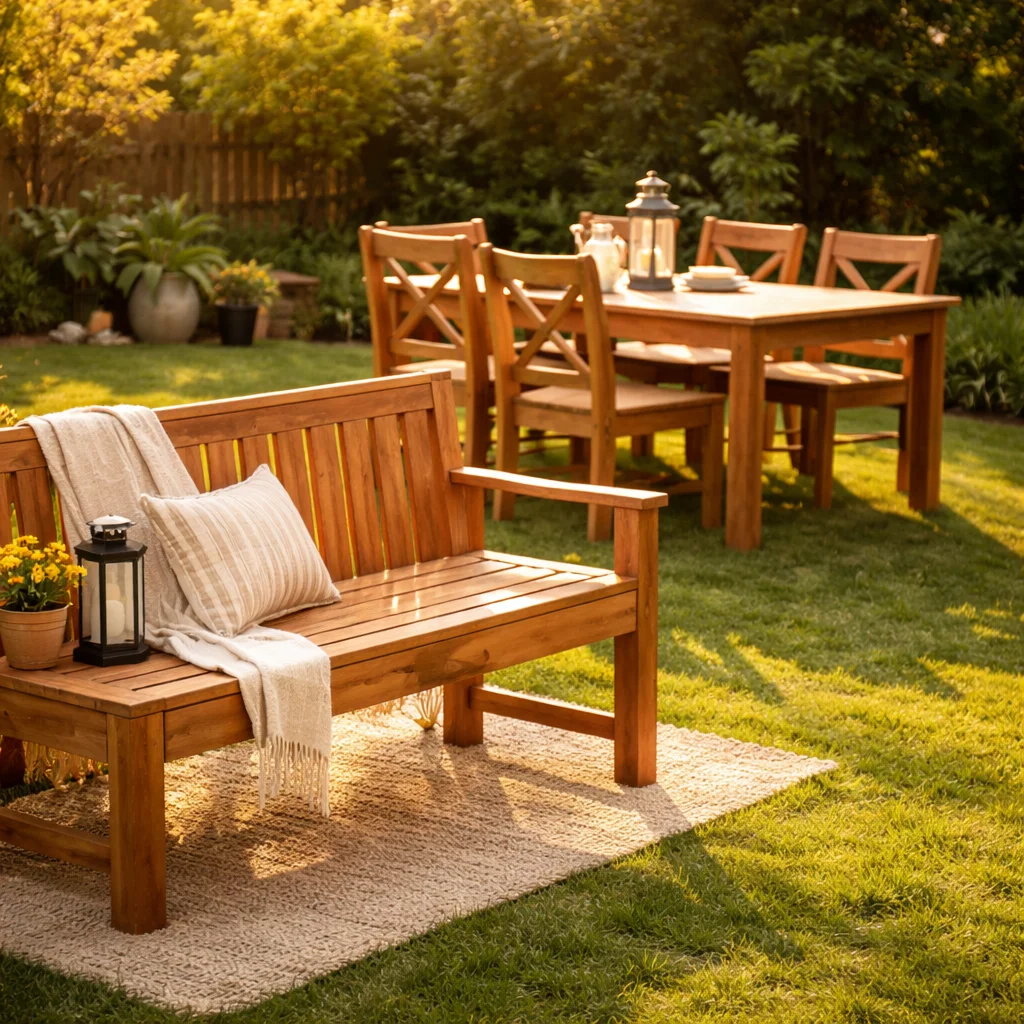
Your backyard deserves better than plastic chairs and a wobbly table from a discount store.
With the right DIY outdoor furniture plans, you can build a space that looks like it was designed — not assembled. A solid wooden bench, a slatted dining table, a sun lounger built to your exact dimensions. All of it made by hand, at a fraction of the retail price.
This article showcases the most impactful outdoor furniture projects you can build this season. Each one is beginner-friendly, uses affordable materials, and delivers the kind of result that makes your neighbours stop and ask where you bought it.
The answer, of course, is that you didn’t.
Before we get into the projects, it’s worth understanding why DIY outdoor furniture plans are worth your time.
Outdoor furniture from garden centres and home stores is expensive, often poorly made, and built to standard dimensions that may not suit your space. A bistro set that looks reasonable in the store can seem undersized on a real patio. A bench that costs $300 is made from compressed board that warps after one winter.
When you build your own, you control everything:
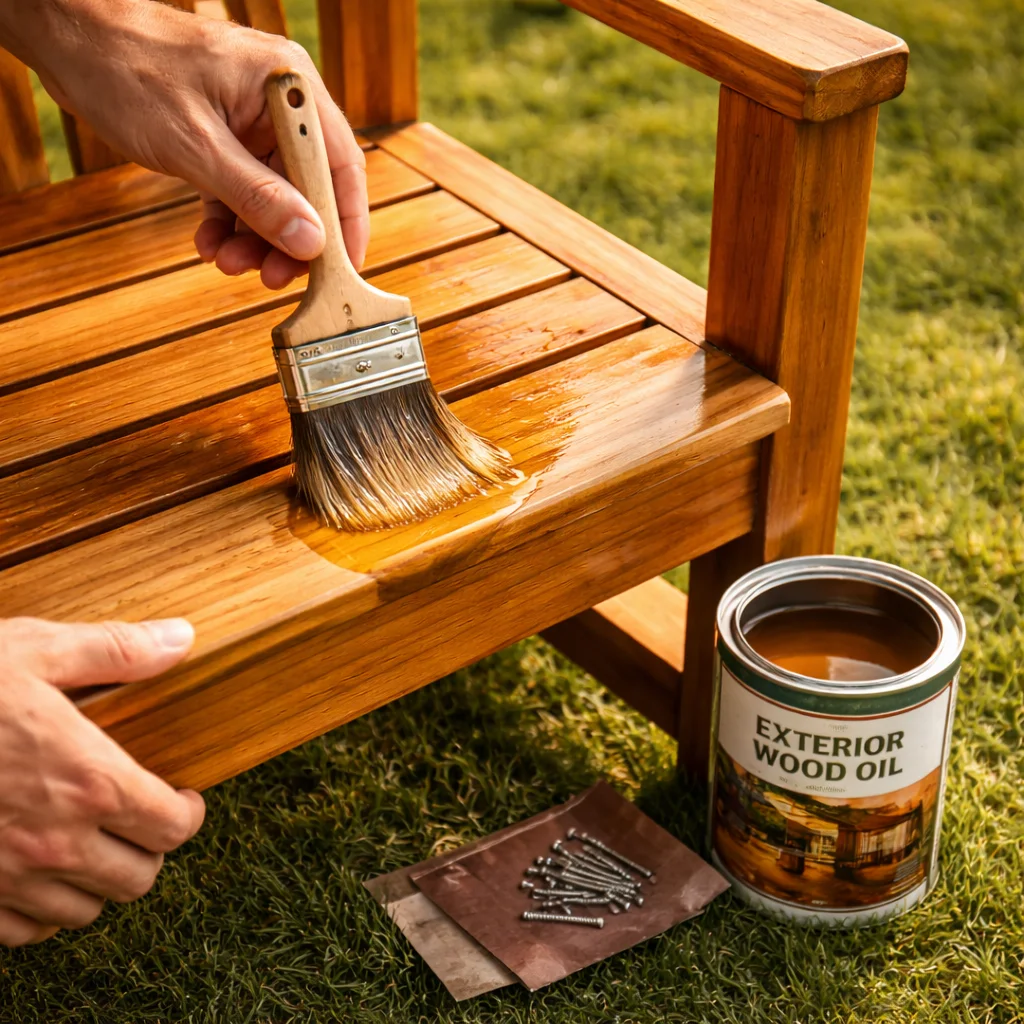
And the cost? A handmade cedar garden bench costs around $60–$80 in materials. The retail equivalent runs $250–$400. The savings fund your next project.
A garden bench is the cornerstone of any outdoor space. It’s also one of the most achievable DIY outdoor furniture plans for a beginner.
The classic design is simple: two end frames connected by long seat rails, topped with evenly spaced timber slats. The end frames each consist of two legs and a horizontal stretcher. Every joint is straightforward — pocket screws and exterior wood glue handle the assembly.
Use cedar for its natural rot resistance. Space the seat slats 8–10mm apart to allow rainwater to drain freely. Finish with a penetrating exterior oil to protect the surface and enhance the natural grain.
A well-built cedar bench lasts 15–20 years with basic annual maintenance.
Time: Full day | Difficulty: Beginner | Cost: ~$60–$80 in materials
An outdoor dining table changes how you use your garden entirely. Suddenly, the backyard becomes somewhere you actually eat, entertain, and spend evenings.
The structure is a rectangular top supported by four legs and a simple apron frame. The top is made from evenly spaced decking boards or wide pine slabs, screwed down from above or fixed with hidden clips for a cleaner look.
The key detail in any good DIY outdoor furniture plan for a table is the stretcher — a horizontal brace between the legs that prevents racking. Without it, the table wobbles under load.
Cedar or treated pine are both solid choices. For a premium result, hardwood such as teak or iroko is exceptionally weather-resistant and beautiful.
Time: Full day | Difficulty: Beginner to intermediate | Cost: ~$80–$120
The Adirondack chair is one of the most iconic pieces of outdoor furniture ever designed. Its raked back, wide armrests, and low seat angle create a naturally comfortable lounging position.
It also looks considerably more complex than it actually is.
The chair is built from flat boards — no steam bending, no complex curves that require specialist tools. The curved back slats are cut with a jigsaw from flat stock. The angled seat and back are achieved simply by cutting the front legs at an angle.
A matched pair of Adirondack chairs with a small side table between them is one of the most visually striking backyard setups you can build. And it costs under $100 for the pair.
Time: Full day | Difficulty: Intermediate beginner | Cost: ~$40–$50 per chair
This project combines two functions in one elegant build: a raised planting bed wrapped by a built-in bench seat.
The planter box sits at the centre. A wide timber surround forms a continuous bench at a comfortable seat height. You can build it as a square, a rectangle, or even an L-shape to fit a corner of your garden.
Cedar is the material of choice for any planter that holds soil. Line the inside with heavy-duty landscape fabric to prevent direct soil contact with the wood. This extends the life of the timber significantly.
The bench seat slats are the same material as the planter sides — giving the whole build a unified, designed look.
Time: Full day to 1.5 days | Difficulty: Intermediate beginner | Cost: ~$90–$130
A floating deck transforms even a featureless backyard into a defined outdoor living space.
A floating deck doesn’t attach to the house — it sits on its own support frame directly on the ground or on adjustable deck feet. This makes it far simpler to build than an attached deck, requires no planning permission in most regions, and can be repositioned if needed.
The frame is a grid of 4×2 joists. The surface is made from decking boards screwed at regular intervals. The whole build is essentially a very large, very flat table lying on the ground.
A 3×4 metre floating deck takes a weekend to build and costs $300–$500 in materials depending on the decking board species. That’s a fraction of a professional quote for the same result.
Time: Full weekend | Difficulty: Intermediate | Cost: ~$300–$500
Material choice is the most important decision you make on any outdoor project.
The wrong timber rots, warps, or cracks within a couple of seasons. The right timber, properly finished, lasts decades.
Here’s a quick guide:
Every DIGITRISER outdoor furniture plan specifies the recommended timber species and grade. You don’t have to guess.
Not all DIY outdoor furniture plans are equal. A good plan designed for outdoor use includes several things that an indoor plan doesn’t need.
Look for:
The DIGITRISER Woodworking Plans E-book includes all of these details in every outdoor project plan. Each one is designed and tested to perform in real outdoor conditions — not just to look good on paper.
[Download the DIGITRISER E-book and start building your dream backyard today →]
A beautiful backyard doesn’t require a large budget or a professional landscaper.
It requires a good set of DIY outdoor furniture plans, the right timber, and a free weekend.
Build a bench this weekend. Add a dining table next month. By the end of the season, your outdoor space will be somewhere you genuinely want to spend time — and everything in it will be something you built yourself.
That’s a feeling no garden centre purchase can replicate.
[Get your DIGITRISER outdoor furniture plans and transform your backyard this season →]
What is the best wood for DIY outdoor furniture?
Cedar is the best all-round choice for most DIY outdoor furniture projects. It’s naturally rot-resistant, lightweight, easy to work with, and widely available at affordable prices. For premium longevity, teak is unmatched — but comes at a higher cost. Always use exterior-grade finishes and stainless steel or galvanised hardware to protect the timber year-round.
How long does it take to build outdoor furniture yourself?
Most beginner DIY outdoor furniture projects — like a garden bench or a planter box — take one full day to complete. More complex builds like an Adirondack chair or an outdoor dining table take a day to a day and a half. A floating deck platform is a full weekend project. Having a complete plan with a cut list makes every build significantly faster.
Is DIY outdoor furniture cheaper than buying from a store?
Yes — significantly. A handmade cedar garden bench costs $60–$80 in materials. The retail equivalent costs $250–$400. An outdoor dining table built from treated pine costs around $100 in timber and hardware, compared to $400–$800 from a garden furniture retailer. The savings are consistent across every category of outdoor furniture.
We’re here to help! Whether you need guidance on choosing the right plans or have questions about our recommendations, our team is ready to assist. Reach out anytime—your success is our priority.