Best Way to Sand Furniture Before Painting




Digitriserkamal
19 April 2026
Not all home improvements are created equal. Some cost a fortune and barely move the needle. Others are surprisingly affordable — and genuinely impressive to buyers, guests, and valuers alike.
Woodworking projects sit firmly in the second category.
A well-built set of fitted shelves, a solid wood kitchen island, or a craftsman-style front door surround can transform a room and lift a property’s perceived value significantly. And unlike a coat of paint, they last for decades.
In this article, you’ll discover the 7 woodworking projects that consistently add the most value to a home — and how to build them yourself for a fraction of the cost of hiring a joiner.
Estate agents, interior designers, and property developers all say the same thing: buyers respond to wood.
Timber has warmth, texture, and permanence that painted plasterboard simply doesn’t. A room with built-in wooden shelving feels more considered and finished than one without. A kitchen with solid wood details feels more premium than one with plastic.
The other advantage is cost. Woodworking projects that add value to your home typically cost 60–80% less to build yourself than to commission from a joiner or carpenter. A set of fitted alcove shelves that costs a joiner $1,200 to install costs you $150 in materials.
That gap is where the real return on investment lives.
Let’s look at the projects that deliver the most impact.
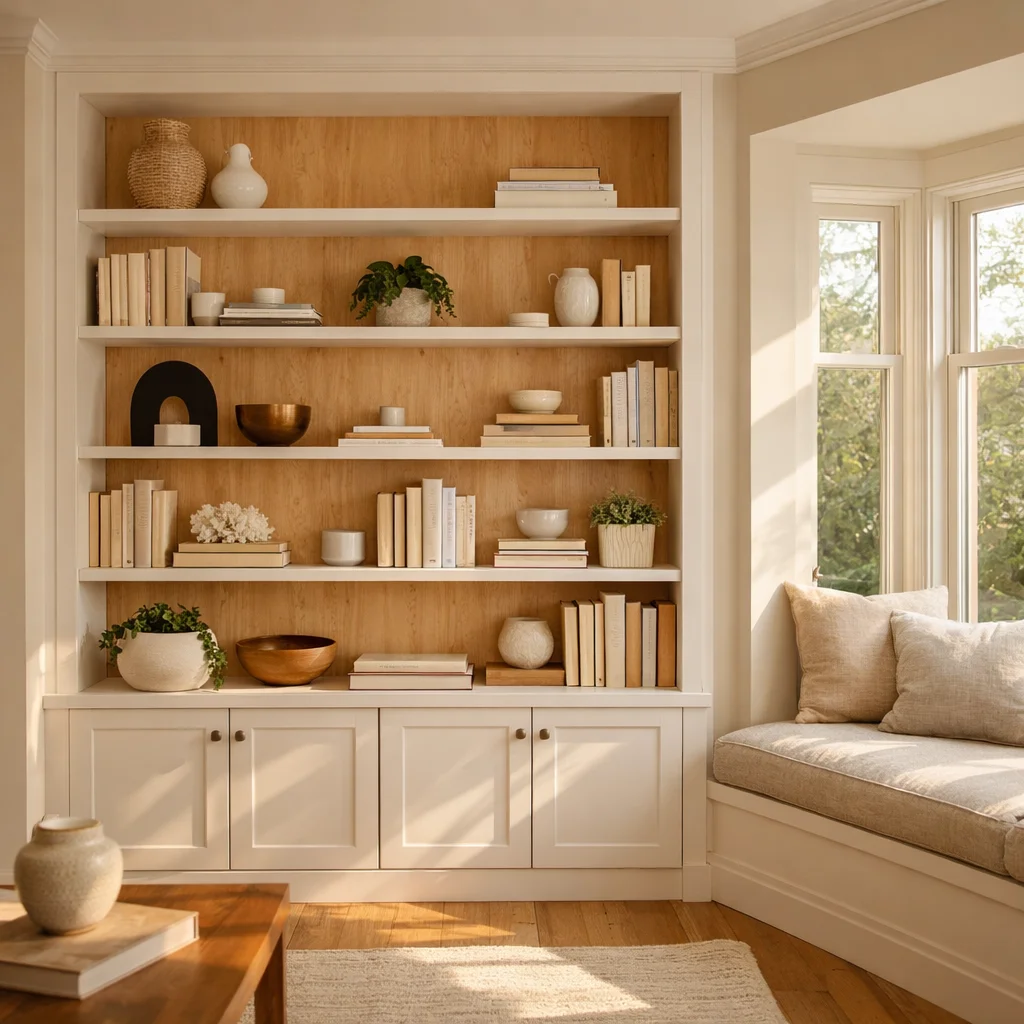
Fitted alcove shelves are consistently ranked among the highest-ROI home improvements you can make.
They transform dead wall space into functional, attractive storage. They make a living room look designed rather than furnished. And they’re one of the most achievable woodworking projects for a beginner — because every alcove is essentially a rectangular box with shelves inside it.
The key is accuracy. Alcoves are rarely perfectly square, so the shelves need to be cut and fitted to the actual dimensions of the space. A spirit level and a good combination square are essential.
Use 18mm MDF for painted shelves, or birch plywood for a more natural look. Add a painted front face frame to give the shelving a built-in, furniture-quality appearance.
Estimated material cost: $100–$180 | Joiner equivalent: $900–$1,400
A kitchen island adds storage, workspace, and a natural social centrepoint to any kitchen. It’s also one of the woodworking projects that adds the most perceived value to a home — particularly in open-plan spaces.
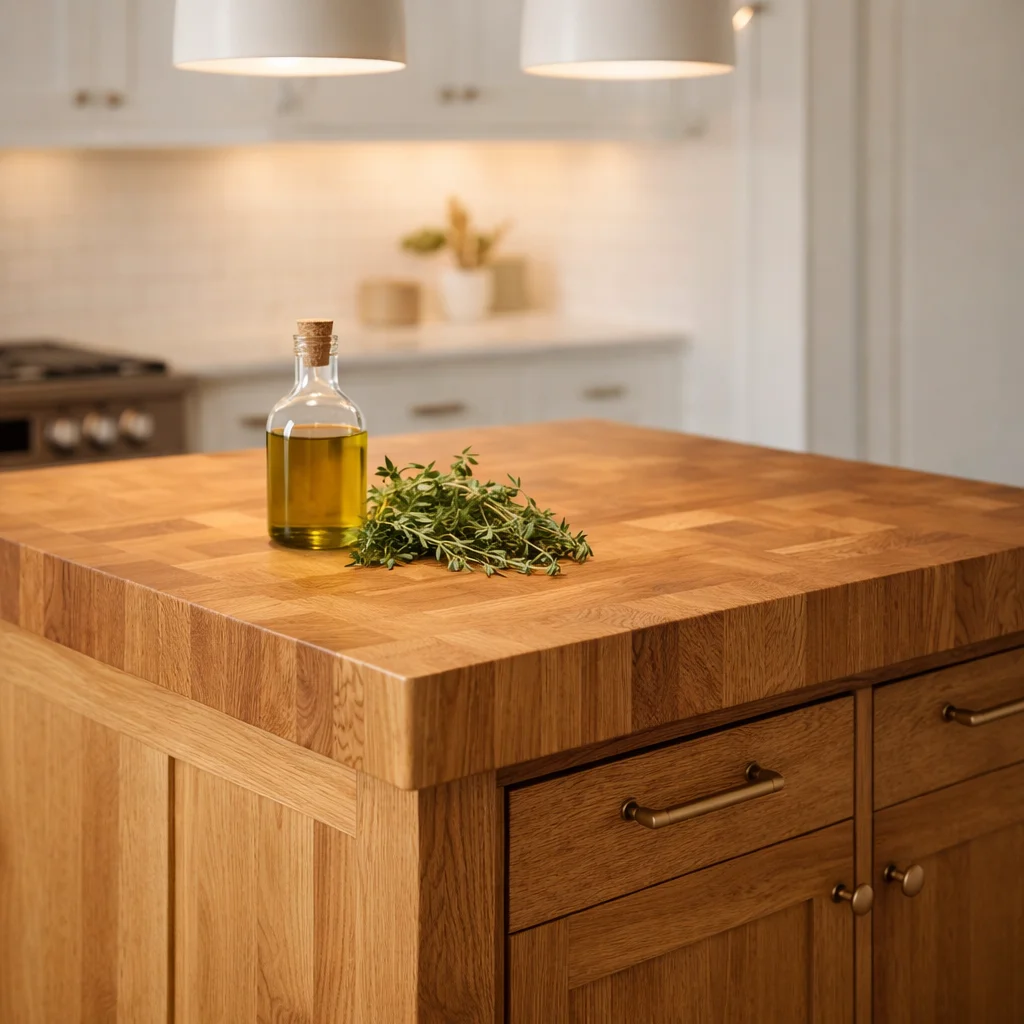
A simple freestanding island is a rectangular cabinet frame on four legs, with a solid timber top. The top is the star of the build — a thick maple or oak butcher’s block surface is both beautiful and highly practical.
Build the base from plywood or pine, add a painted finish, and top it with a 50mm thick maple panel glued from narrow strips. Sand to 220 grit and finish with food-safe cutting board oil.
Estimated material cost: $200–$350 | Retail equivalent: $600–$1,200
A built-in wardrobe makes a bedroom feel larger, look more premium, and function significantly better than freestanding wardrobes.
The build is a carcass of plywood panels — sides, top, base, and back — fixed directly into the wall. Inside, a combination of hanging rails, fixed shelves, and drawer units provides flexible storage.
Sliding doors or bifold doors finish the build. These are widely available as off-the-shelf kits that simply need to be cut to height and hung on a track.
A fitted wardrobe built from quality plywood adds genuine selling appeal to a bedroom — especially in a property where storage is limited.
Estimated material cost: $300–$500 | Fitted wardrobe company equivalent: $1,500–$3,000
A window seat is one of those features that makes people stop and say “I love this room.”
It transforms an awkward bay window or underused wall into a cosy seating area with built-in cushioned seat and storage drawers or lift-up lid beneath. Estate agents consistently note that character features like window seats increase buyer interest.
The frame is a simple box of 18mm plywood with a hinged lid or pull-out drawers. The seat pad is a foam cushion covered in fabric — not a woodworking task, but an easy add-on.
The total build takes a weekend. The result looks like a bespoke joinery feature.
Estimated material cost: $120–$200 | Bespoke joiner equivalent: $800–$1,500
Stairs are one of the first things you see when you enter a home. Tired, carpeted stairs with plain MDF risers don’t make a great first impression.
Replacing or cladding the stair treads in solid oak and adding turned newel posts and painted spindles transforms the entrance hall immediately. It’s one of the most impactful woodworking projects that adds value to your home — and it’s more achievable than it looks.
Solid oak stair nosings and treads are available pre-cut in standard widths. The woodworking task is fitting them accurately, cutting to length, and applying the right finish.
Estimated material cost: $400–$700 | Professional fitting equivalent: $1,500–$2,500
Outdoor space has become one of the top priorities for home buyers since the shift to remote working. A well-built timber deck extends your usable living area and makes your garden feel like a room.
A floating deck — sitting on ground-level support posts without attaching to the house — is the most beginner-accessible version. It requires no planning permission in most regions and can be built over a weekend using decking boards and 4×2 joists.
Use pressure-treated timber for the frame and natural hardwood or composite decking boards for the surface. Apply a UV-resistant decking oil annually.
Estimated material cost: $500–$900 | Landscaper equivalent: $2,000–$4,000
A fireplace surround is the focal point of a living room. An original or well-crafted timber surround adds character and warmth that no manufactured substitute replicates.
If the existing surround is damaged, plain, or absent, building a replacement from MDF and timber moulding is a surprisingly achievable project. The components are a mantelshelf, two pilasters (vertical side pieces), and a central frieze above the firebox opening. Assembled and painted, the result looks entirely authentic.
Use moisture-resistant MDF for the main panels and solid timber moulding for the decorative profiles. Sand, prime, and paint with a hard gloss for a traditional finish.
Estimated material cost: $150–$250 | Antique or bespoke surround equivalent: $600–$2,000
Building the project is only half the equation. How you finish it determines how much value it adds.
Keep these principles in mind:
Every DIGITRISER woodworking plan is designed to help you achieve the kind of finish that genuinely adds value. Clean, accurate, and built to last.
[Download the DIGITRISER Woodworking Plans E-book and start adding value to your home today →]
The best home improvements don’t always come from contractors and renovation teams. Sometimes they come from a weekend, a set of good tools, and the right woodworking plan.
The seven projects in this guide consistently deliver the strongest combination of visual impact, functional value, and return on investment. Any one of them can transform a room. Together, they can transform a home.
Start with one. Build your confidence. Then move to the next.
Your home is worth the investment — and so is the skill you build along the way.
[Get your DIGITRISER woodworking plans and start improving your home this weekend →]
What woodworking projects add the most value to a home?
The woodworking projects that consistently add the most value to a home are fitted alcove shelving, built-in wardrobes, kitchen islands with solid timber tops, and window seats with storage. These projects increase both the functionality and the perceived quality of a space — two factors that buyers and valuers respond to strongly.
Is it worth building home improvement projects yourself instead of hiring a joiner?
In most cases, yes — significantly. DIY woodworking projects typically cost 60–80% less than hiring a professional joiner for the same work. A set of fitted alcove shelves that costs $150 in materials would cost $900–$1,400 to commission. The savings are consistent across almost every type of built-in woodworking project.
Do I need experience to build projects that add value to my home?
No — many of the most impactful home improvement woodworking projects are genuinely beginner-friendly. Fitted shelving, window seats, and floating decks all use straightforward joinery and basic tools. The key is working from a detailed, well-tested woodworking plan that guides every measurement, cut, and assembly step with precision.
We’re here to help! Whether you need guidance on choosing the right plans or have questions about our recommendations, our team is ready to assist. Reach out anytime—your success is our priority.