Best Way to Sand Furniture Before Painting




Digitriserkamal
30 April 2026
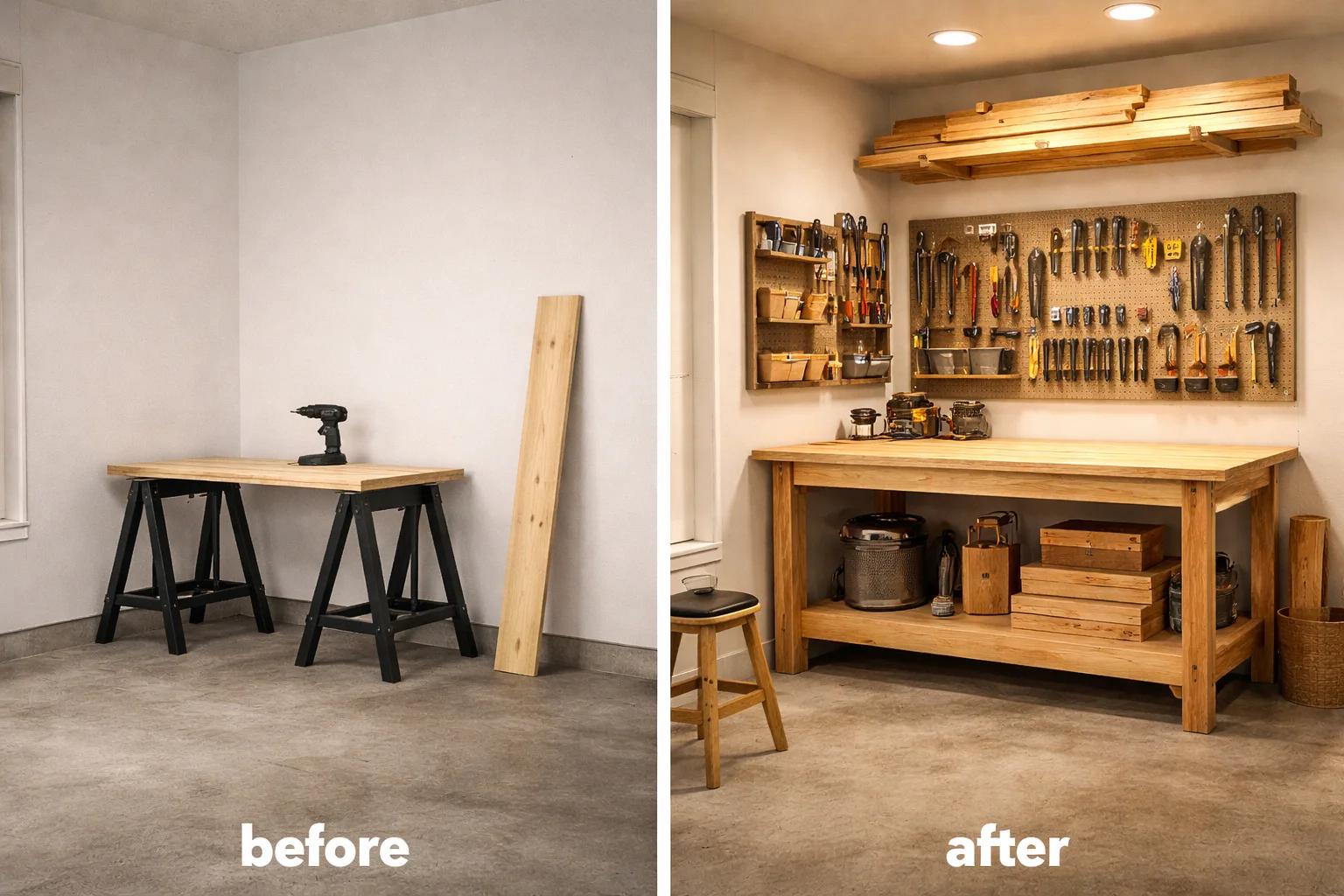
Every woodworker starts somewhere.
For most, that starting point looks the same: no experience, a vague idea of what they want to build, and a nagging feeling that it’s probably more complicated than it looks.
That was exactly where Marcus found himself eighteen months ago. No workshop. No tools beyond a basic drill. No idea where to begin. Today, he has a fully equipped home workshop, a living room full of furniture he built himself, and a skill set that continues to grow with every project.
This is his beginner woodworking success story — and the lessons inside it are relevant to anyone who’s been wondering whether to start.
Marcus is a 38-year-old logistics manager from the Midwest. He’s not a tradesperson. He has no formal training in construction or joinery. Before taking up woodworking, the most complex thing he’d built was a flat-pack wardrobe.
His reason for starting was simple: he wanted a farmhouse dining table for his kitchen. Every table he found in furniture stores was either too expensive, the wrong size, or made from materials that felt cheap when you knocked on them.
A colleague mentioned he’d built his own table from a plan. Marcus was sceptical. “I thought woodworking was for people who grew up doing it,” he says. “I didn’t think someone like me could just start.”
He decided to try anyway.
Marcus’s first build was a simple serving tray — one of the introductory projects in the DIGITRISER Woodworking Plans E-book.
He chose it deliberately. “I wanted something small enough that if I completely messed it up, it wouldn’t matter. I just needed to know if I could actually do this.”
He bought a single pine board from a local hardware store. He read the plan twice before touching the wood — something he now considers the most important habit in his toolkit. He made his cuts, sanded through the grits, and applied a coat of mineral oil.
“It took about two hours. It wasn’t perfect — one edge was slightly uneven — but it was a real thing I’d made. I put it on the kitchen counter and left it there for a week just because I was so pleased with it.”
That tray is still in Marcus’s kitchen today.
The serving tray gave Marcus something no tutorial had given him before: evidence that he could do it.
He moved through the beginner tier of the DIGITRISER plans methodically — a coat rack, a set of floating shelves, a bedside table. Each project introduced a new skill. Each one built on the last.
“The thing I didn’t expect was how much faster each project got. By the time I built the shelves, I wasn’t stopping to re-read every step. I was just building.”
Three months into his woodworking journey, Marcus built his first piece of structural furniture: a simple coffee table for the living room. It took a full day and a half. It sits in his living room now, used every day.
“My wife asked me when I’d ordered it. When I told her I’d built it, she didn’t believe me at first.”
At around the six-month mark, Marcus realised his makeshift setup — a pair of sawhorses in the garage — was limiting what he could build.
He decided to build the workshop properly.
Using the workshop storage and bench plans from the DIGITRISER advanced tier, he spent a weekend transforming half his garage into a functioning workshop. He built:
Total material cost: approximately $280. Professional equivalent: $1,500–$2,000.
“Building the workshop was the moment everything clicked. I wasn’t just doing woodworking. I was a woodworker.”
Twelve months after that first serving tray, Marcus built the project that started everything: the farmhouse dining table.
He used the DIGITRISER farmhouse table plan — the same plan featured in the Day 12 post on this blog. He chose solid oak rather than pine, wanting the table to last a lifetime.
The build took two full days. The glue-up of the top was the most nerve-wracking part. Getting the apron frame perfectly square required patience and four clamps working simultaneously. The finishing took a further two days — three coats of hard-wax oil with light sanding between each coat.
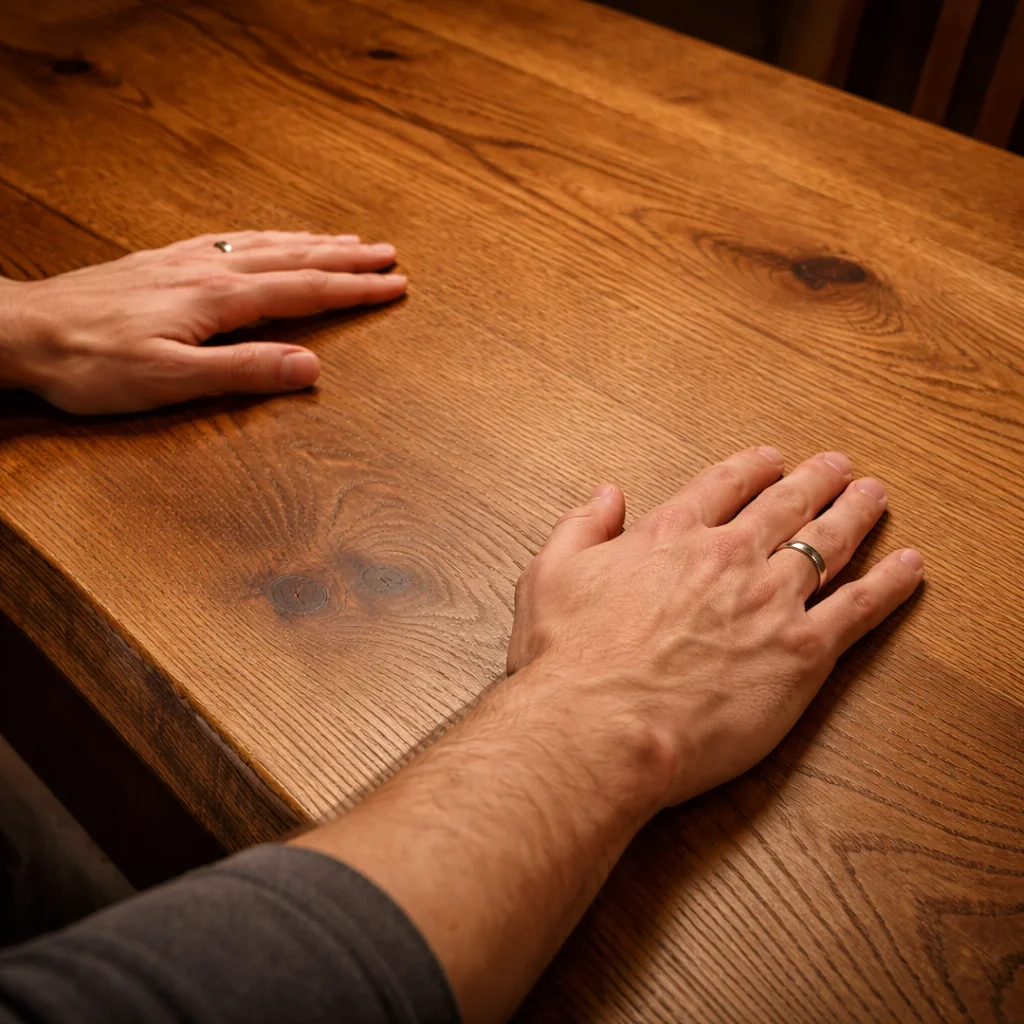
“When I put it in the kitchen and we sat down for the first meal at it, I couldn’t stop running my hand across the top. I’d made that. From raw timber. That feeling doesn’t go away.”
The table seats six comfortably. It has a slight live-edge character on one end board that Marcus chose deliberately. It will be in his family for generations.
Marcus’s journey from zero to functioning workshop took eighteen months of weekend builds. Looking back, he identifies five things that made the difference.
The serving tray wasn’t the project Marcus wanted to build. But it was the right first project. It gave him a win, a skill, and the confidence to continue. Rushing to a complex build before you’re ready produces frustration, not furniture.
Every time Marcus followed this rule, the build went smoothly. Every time he skipped it — twice, early on — he hit avoidable problems mid-build. Reading the plan is not wasted time. It’s the most productive thing you do before the first cut.
Marcus learned early that the quality of the timber affects every stage of the build. Warped boards create problems that no skill can fix. Spending an extra ten minutes selecting straight, knot-free boards at the hardware store pays off across the entire project.
Impatience at the glue-up stage costs more time than it saves. Marcus learned this when a joint opened on his second project after he rushed the cure time. Now he always leaves glued joints overnight — minimum.
This is the piece Marcus says made the most difference. “A lot of free stuff online assumes you already know things. The DIGITRISER plans explained everything. I never hit a step and thought ‘what does that mean?’ It was written for someone who was actually a beginner.”
That last point is the whole philosophy behind the DIGITRISER Woodworking Plans E-book. Every plan is written, tested, and refined for builders who are starting from zero — with no assumed knowledge, no skipped steps, and no dimensions that don’t add up.
Marcus’s beginner woodworking success story is not exceptional. It’s repeatable.
Every element of his journey — the first small project, the growing confidence, the workshop build, the flagship piece — is available to anyone willing to start.
You don’t need a background in construction. You don’t need an expensive workshop. You don’t need years of experience.
You need a plan you can trust, a willingness to start small, and the patience to let the skill develop one project at a time.
Your first project is waiting. The question is simply when you decide to begin.
[Get your DIGITRISER woodworking plans and write your own success story →]
Can a complete beginner really learn woodworking from a plans e-book?
Yes — and Marcus’s story is proof. He had no prior experience, no formal training, and no woodworking background when he started. By following the DIGITRISER plans in order — starting with simple beginner projects and progressing through the tiers — he built a fully equipped workshop and a solid oak dining table within eighteen months. The key is choosing plans written specifically for beginners, with no assumed knowledge.
How long does it take to go from beginner to confident woodworker?
Most people who build consistently — one to two weekend projects per month — develop genuine confidence within six to twelve months. The progression is faster than most beginners expect, because each project builds directly on the last. The first three or four projects feel slow. By the tenth, the process is natural. By the twentieth, the skill is real.
What is the best first woodworking project for an absolute beginner?
The best first project for a complete beginner is something small, functional, and forgiving — a serving tray, a coat rack, or a picture frame. These projects use straight cuts, require minimal tools, and can be completed in a single session. They produce a real, usable result that builds confidence immediately — which is exactly what a beginner needs to keep going.
We’re here to help! Whether you need guidance on choosing the right plans or have questions about our recommendations, our team is ready to assist. Reach out anytime—your success is our priority.