Best Way to Sand Furniture Before Painting




Digitriserkamal
3 May 2026
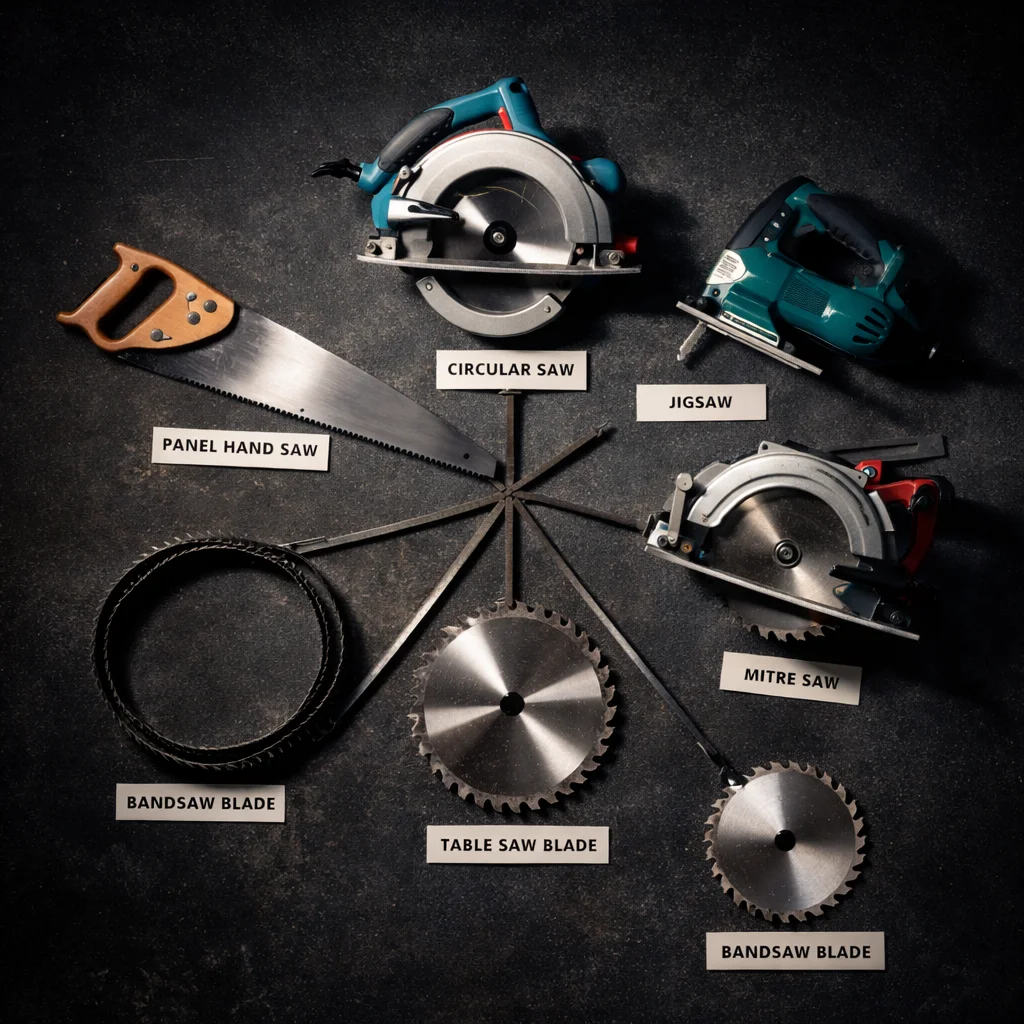
The saw is the most important tool in any woodworker’s arsenal. It’s also the one that causes the most confusion for beginners.
Hand saw or circular saw? Jigsaw or mitre saw? Do you need all of them, or will one do for now?
Walk into a hardware store without a clear answer and you’ll either buy too much, spend too little, or end up with a tool that doesn’t suit the projects you actually want to build.
This guide cuts through the confusion. It covers every main type of saw used in woodworking, what each one does best, and exactly which one to buy first depending on your project type and budget.
Choosing the wrong saw doesn’t just slow you down. It makes certain cuts impossible, certain projects inaccessible, and certain results — no matter how careful you are — consistently disappointing.
A jigsaw can’t make a long, straight rip cut cleanly. A hand saw is slow and exhausting for cutting sheet material. A circular saw can’t follow a tight curve.
Each saw is designed to solve a specific cutting problem. Understanding those problems — and matching each one to the right tool — is one of the most practical decisions you make as a developing woodworker.
The good news is that you don’t need every saw from day one. Start with one or two that cover your planned projects. Add others as your builds require them.
The hand saw is the oldest, most accessible, and most portable saw in woodworking. It requires no power source, makes no noise beyond the cut, and is safe enough to use on a kitchen table.
A standard panel saw (20–26 inches, 8–12 TPI) handles the majority of beginner cuts — crosscuts across the grain and rip cuts along the grain — on solid timber and sheet material.
What it does best:
What it doesn’t do well:
Best for: complete beginners working with limited budget and space. Every woodworker should own a hand saw regardless of what power tools they have.
Cost: $20–$50 for a quality panel saw.
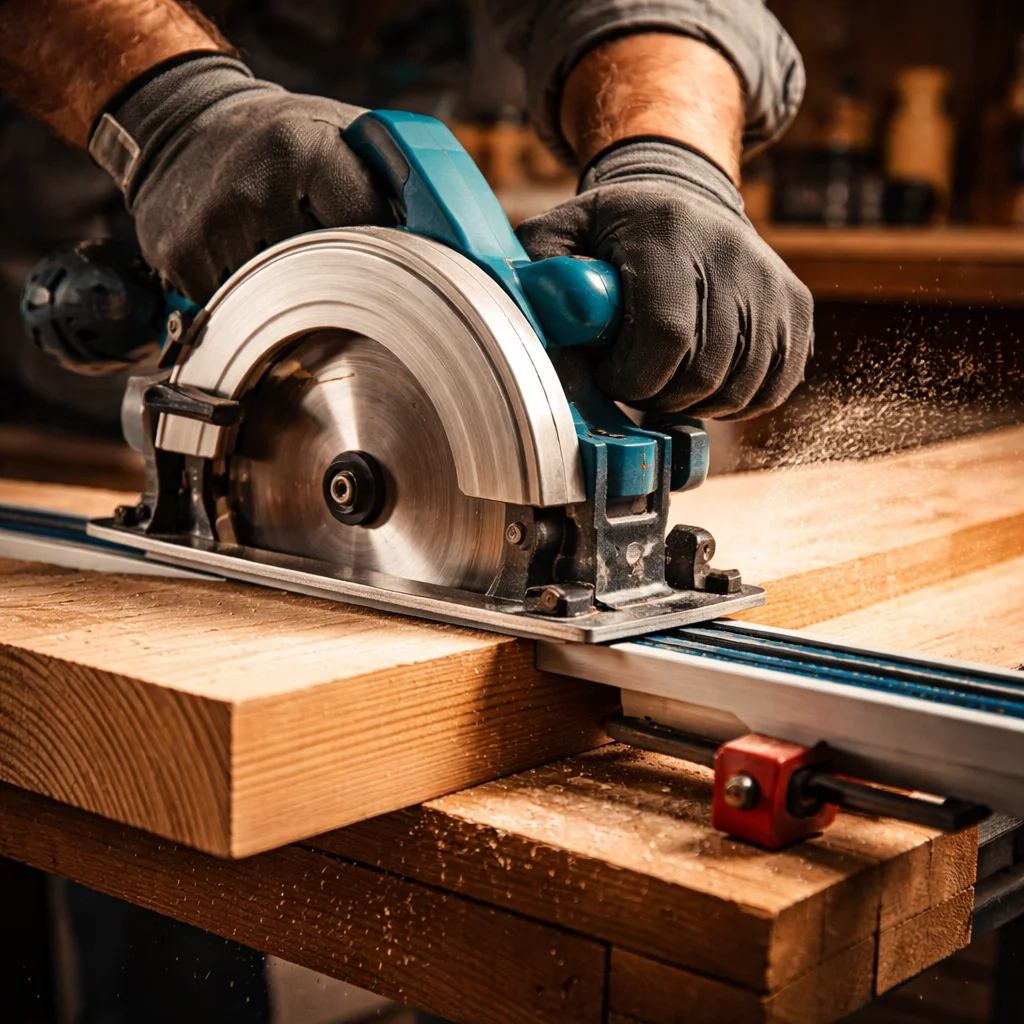
The circular saw is the workhorse power saw for most home workshop woodworkers. It handles rip cuts, crosscuts, and bevel cuts on solid timber, sheet material, and plywood — quickly, powerfully, and accurately when used with a straight edge guide.
It’s portable, relatively affordable, and versatile enough to replace several other saws for most beginner and intermediate projects.
What it does best:
What it doesn’t do well:
Best for: anyone building furniture from sheet material, or tackling larger projects that involve lots of straight cutting. This is the most useful first power saw for the majority of beginners.
Cost: $60–$150 for a reliable corded or cordless model.
The jigsaw is the saw for curves. It cuts irregular shapes, internal cut-outs, circles, and any profile that a straight blade can’t follow.
It’s also a useful tool for plunge cuts — cutting a hole in the middle of a panel without starting from the edge. This is essential for tasks like cutting sink apertures in kitchen worktops or creating shaped decorative elements.
What it does best:
What it doesn’t do well:
Best for: anyone building projects with shaped elements — Adirondack chair legs, decorative shelf brackets, serving board handles, children’s furniture with rounded corners.
Cost: $40–$100 for a quality corded or cordless model.
The mitre saw makes fast, precise angled and crosscuts. You set the angle, drop the blade, and get a perfectly repeatable cut every time. It’s the standard tool for cutting timber to length, cutting skirting boards and architrave, and making the 45° mitre cuts used in picture frames and decorative moulding.
A sliding compound mitre saw extends the capacity to cut wider boards — useful for furniture-scale crosscuts.
What it does best:
What it doesn’t do well:
Best for: anyone building furniture that requires precise, repeatable cuts at consistent angles. Essential for picture frames, stair components, skirting boards, and any project where multiple pieces must be cut to exactly the same length.
Cost: $150–$400 depending on size and sliding capacity.
The table saw is the most powerful and most accurate saw available for a home workshop. A flat table holds the workpiece while a fixed circular blade rises through the surface. The fence guides rip cuts with exceptional precision.
It’s the standard tool in professional cabinet-making and furniture workshops because it produces cuts that are straighter, cleaner, and more consistent than any other saw.
What it does best:
What it doesn’t do well:
Best for: serious intermediate to advanced woodworkers who are building furniture regularly and want the most accurate ripping and crosscutting available. Not a beginner’s first purchase.
Cost: $300–$800 for a contractor or hybrid table saw suitable for home workshop use.
The bandsaw uses a continuous loop blade running between two wheels to cut curves, resaw thick timber, and cut irregular shapes with more control than a jigsaw.
It’s particularly useful for resawing — cutting a thick board into thinner slices along its width — which creates bookmatched panels, thin veneers, and custom-thickness stock.
What it does best:
What it doesn’t do well:
Best for: intermediate to advanced woodworkers who work with thick stock or want to cut their own veneers and bookmatched panels.
Cost: $200–$500 for a 14-inch home workshop model.
This is the question most beginners actually need answered. Here’s a practical guide based on what you plan to build:
If you’re starting from zero with a limited budget: Buy a quality hand saw ($20–$50) first. It handles everything a beginner project requires and costs very little. Add a jigsaw or circular saw as your second purchase once you’re ready.
If you’re building furniture from sheet material (plywood, MDF): Start with a circular saw. It’s the most versatile power saw for this type of work. A straight edge guide (a simple clamped batten) transforms it into a precision cutting tool.
If your projects involve curves or shaped elements: Add a jigsaw early. It opens up a category of builds that straight-cut saws can’t touch.
If precision crosscuts and angle cuts are central to your builds: A mitre saw is worth the investment once your skills grow. It makes the most common power saw cut — crosscutting to length — faster and more accurate than any alternative.
If you want to build cabinetry and furniture at a serious level: Eventually, a table saw becomes the most important tool in the workshop. But earn your way there through smaller builds first.
Every saw choice ultimately comes back to what you’re building.
A well-written woodworking plan tells you exactly which cuts are required for each project — straight or curved, crosscut or rip, square or angled. That tells you which saw you need.
Every DIGITRISER woodworking plan includes a tool list specifying exactly which saws and tools are required for that build. You don’t have to guess whether your current toolkit covers the project — the plan tells you before you start.
Choosing the right saw for woodworking doesn’t require owning every saw. It requires understanding what each one does — and matching your purchases to the projects you actually want to build.
Start with a hand saw or a circular saw. Build your skills. Add tools as your projects require them.
A well-chosen saw, used with a proper plan, produces results that surprise you every time.
What is the best first saw for a beginner woodworker?
A quality hand saw is the best first saw for a complete beginner — it costs $20–$50, requires no power, and handles all the basic cuts needed for beginner projects. As a first power saw, a circular saw is the most versatile option — it cuts solid timber and sheet material quickly and accurately, and costs $60–$150 for a reliable model. Most beginners benefit from owning both within the first few months.
Do I need a mitre saw to start woodworking?
No — a mitre saw is not essential for beginners. A hand saw with a mitre box ($15–$25) makes accurate 45° and 90° cuts for picture frames and moulding without a power tool. A mitre saw becomes genuinely useful once you’re building furniture regularly and need fast, repeatable crosscuts at precise angles. It’s a tool worth adding once your skill level and project ambitions grow.
What is the difference between a jigsaw and a circular saw?
A circular saw makes long, straight cuts and is best suited for ripping timber and cutting sheet material. A jigsaw follows curves and cuts irregular shapes, internal cut-outs, and complex profiles. They solve different cutting problems — most active woodworkers own both. If you can only buy one first, choose based on your planned projects: straight furniture builds favour the circular saw, shaped or decorative projects favour the jigsaw.
We’re here to help! Whether you need guidance on choosing the right plans or have questions about our recommendations, our team is ready to assist. Reach out anytime—your success is our priority.