Best Way to Sand Furniture Before Painting




Digitriserkamal
4 May 2026
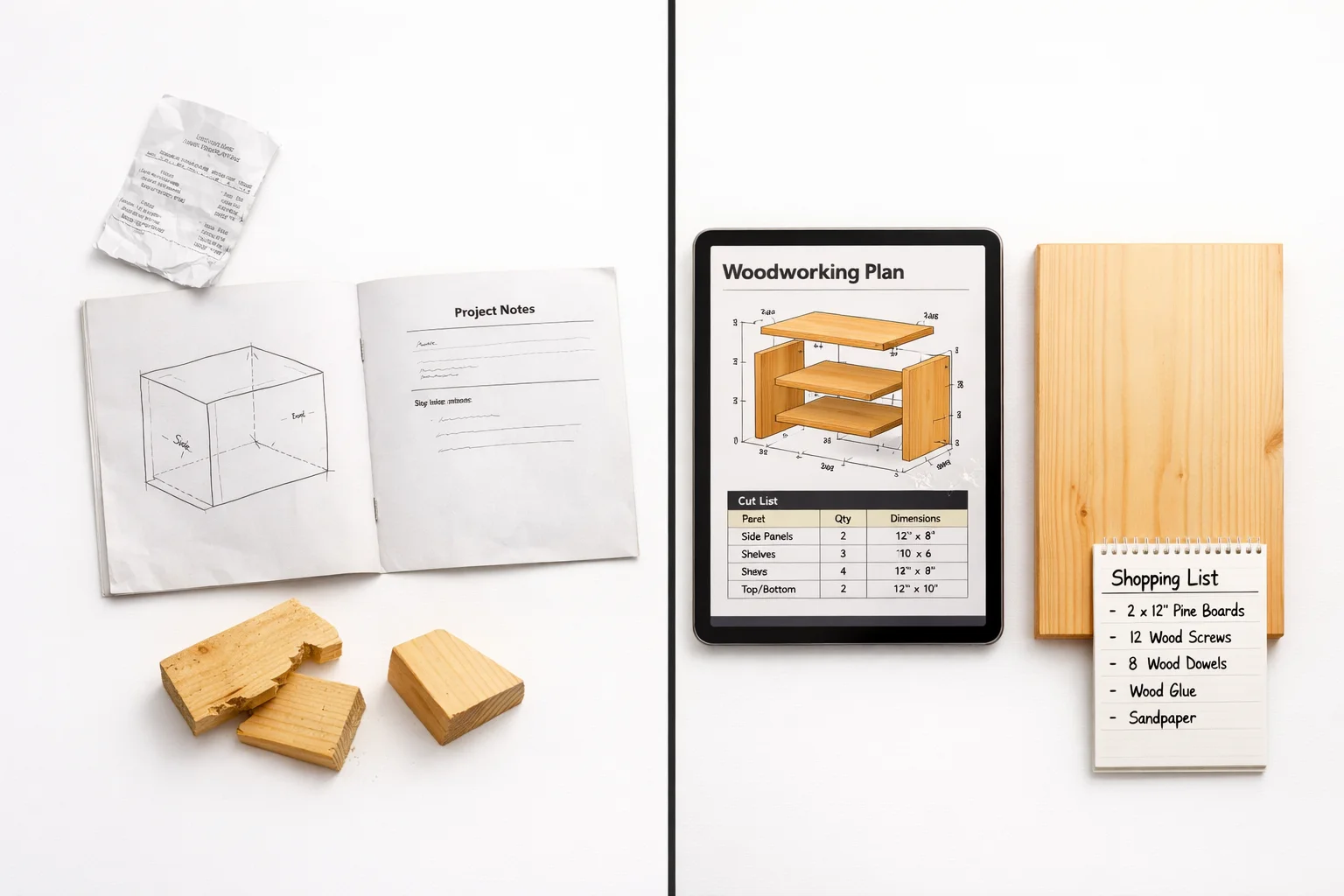
You’ve walked past the woodworking section of a hardware store. You’ve seen the printed plan booklets on the shelf — or the laminated instruction cards next to the timber.
Maybe you’ve bought one. Maybe you’ve wondered whether they’re worth it.
Here’s the honest answer: digital woodworking plans and hardware store plans are not the same product. They look similar from the outside — both claim to tell you how to build something. But in practice, the experience of following each one is completely different.
This article breaks down exactly why digital woodworking plans deliver a better building experience — and what that difference means for the quality of your finished projects.
Hardware store plans come in a few forms. There are printed booklets sold near the checkout, instruction cards bundled with specific timber packages, and occasionally QR codes linking to a basic online guide.
They share several characteristics:
For a simple shelf bracket or a basic garden planter, a hardware store plan might be sufficient. For anything more complex — a dining table, a bookshelf, a bed frame — the gaps in the instructions become genuine obstacles.
A well-designed digital woodworking plan is a fundamentally different document. It’s not a simplified instruction sheet. It’s a complete building guide written for a specific project, at a specific skill level, with no assumed knowledge.
Here’s what separates a quality digital plan from a hardware store alternative.
Every measurement in a professional digital plan is calculated, tested on a real build, and checked for accuracy before publication.
You get the exact length, width, and thickness of every single component — not approximations based on nominal lumber sizes. You know precisely how much timber to buy. You know exactly how each piece is cut. Nothing requires guesswork or interpretation.
A proper cut list is one of the most time-saving documents in woodworking.
It lists every piece in the project — name, quantity, length, width, and thickness — in a clear table format. You work through the list at the timber yard and buy exactly what you need. You work through it again at the saw and cut each piece in order.
No waste. No second trips. No confusion about which dimension belongs to which component.
Digital plans include multiple views of the project — front, side, top, and exploded perspective — at every stage of the build.
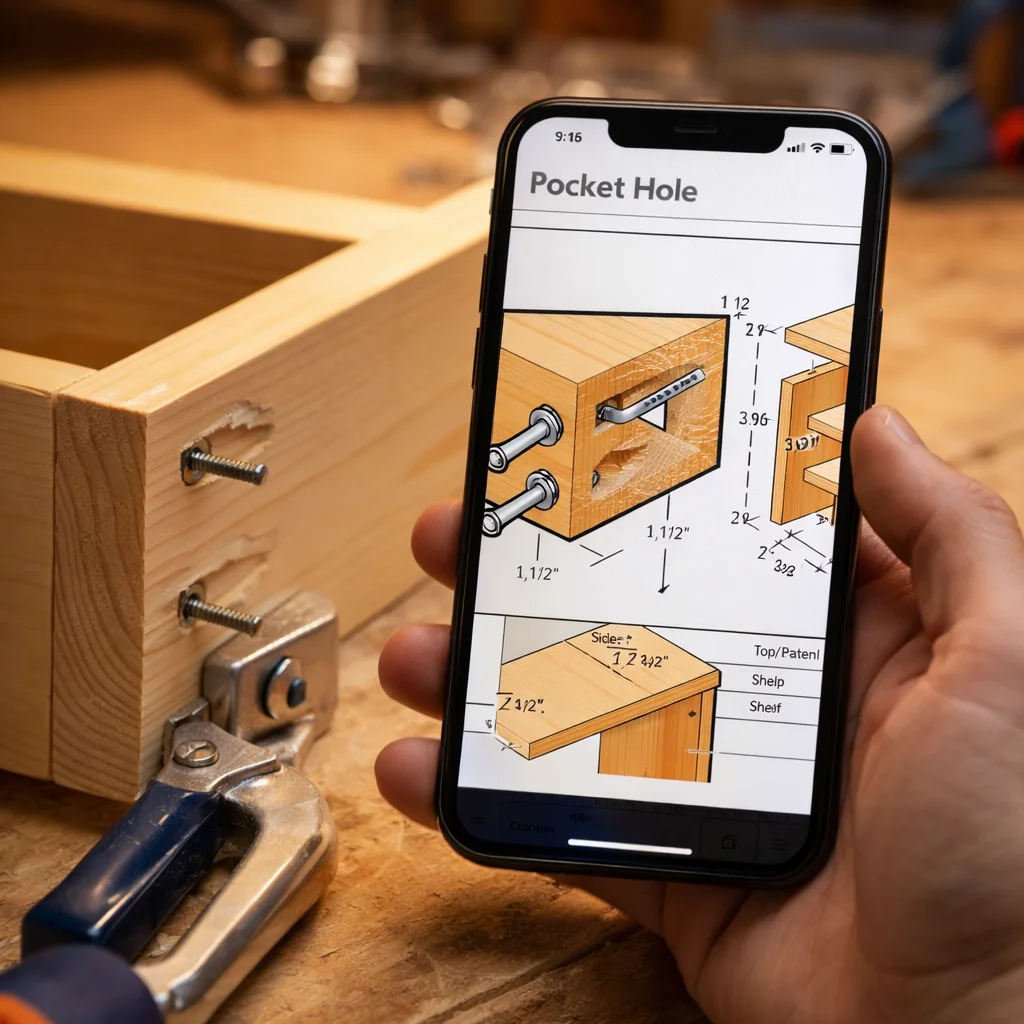
Where a hardware store plan might show one illustration of the finished piece, a digital plan walks you through each assembly stage with a specific diagram. You see exactly how the joints connect, which direction the pocket screws drive, and how each component relates to the next.
This level of visual detail is the difference between following instructions and understanding what you’re building.
A professional digital plan doesn’t end at assembly. It tells you how to prepare the surface, which grit to sand to, which type of finish suits the timber species used, and how many coats to apply.
For a beginner, these details are not minor. The finishing stage defines how the piece looks. Getting it wrong — or not knowing where to begin — is one of the most common reasons a well-built project ends up looking disappointing.
This is the practical advantage that makes digital plans genuinely superior for in-workshop use.
A printed plan gets covered in sawdust, folded in a pocket, or left in the house while you’re working in the garage. A digital plan on your phone or tablet is always with you, pinch-to-zoom on the diagram you need, right at the moment you need it.
You can scroll back to a previous step without losing your place. You can zoom into a joint detail that would be illegible on a printed page. You can search for a specific component name rather than flipping through pages.
For in-workshop use, digital is simply more practical.
Some are. But the relevant comparison isn’t price — it’s value.
A hardware store plan that costs $5 but causes two wasted trips to the timber yard, three hours of troubleshooting, and a finished piece that doesn’t match your vision has a real cost that far exceeds its sticker price.
A digital plan that costs $15–$25 and guides you through a build with zero wasted material and a professional result is exceptional value by comparison.
When you factor in the timber saved by having an exact cut list, a quality digital plan typically pays for itself on the first project.
You can. And some free plans are genuinely good.
But free plans are inconsistent. Some are incomplete. Some have errors that only become apparent mid-build. Some are written for tools or skill levels that don’t match yours. Some end at assembly without a single word about finishing.
The value of a professional digital plan collection isn’t access to any plan. It’s access to plans that have been written, tested, and refined to work for a real beginner in a real home workshop — every time.
This is understandable. But it’s also solvable.
A digital plan can be printed at home in seconds. Print the cut list in A4 for the timber yard. Print the assembly diagrams in full-page format for the workbench. Mark them up with pencil as you work.
You get the depth and accuracy of a professional digital plan with the physical format that feels comfortable to work from.
The table saw is the most powerful and most accurate saw available for a home workshop. A flat table holds the workpiece while a fixed circular blade rises through the surface. The fence guides rip cuts with exceptional precision.
It’s the standard tool in professional cabinet-making and furniture workshops because it produces cuts that are straighter, cleaner, and more consistent than any other saw.
What it does best:
What it doesn’t do well:
Best for: serious intermediate to advanced woodworkers who are building furniture regularly and want the most accurate ripping and crosscutting available. Not a beginner’s first purchase.
Cost: $300–$800 for a contractor or hybrid table saw suitable for home workshop use.
Every plan in the DIGITRISER Woodworking Plans E-book is written to the same professional standard:
Thirty plans. Five skill tiers. Instant download. Accessible on every device.
This is the resource that replaces a shelf full of hardware store booklets, a folder of printed tutorials, and hours of searching for reliable information online.
The difference between a hardware store plan and a professional digital plan isn’t just content. It’s confidence.
When you start a build knowing that every dimension is correct, every cut is listed, and every assembly step is explained — you work differently. You move faster. You make decisions with certainty. You spend your energy building, not troubleshooting.
That confidence compounds. Each successful build using a plan you trusted makes the next one easier. Each project that finishes cleanly and looks professional makes you more ambitious about the next.
A hardware store plan might get you through a simple shelf. A professional digital plan library builds a woodworker.
Digital woodworking plans aren’t better than hardware store plans because they’re digital. They’re better because they’re complete.
Exact dimensions. Full cut lists. Step-by-step diagrams. Finishing guidance. Accessible anywhere. Tested on real builds by real beginners.
That’s not the same product as a laminated card next to the timber rack.
If you’re serious about building well — and building consistently — the plan you start with matters more than most people realise.
Are digital woodworking plans better than printed ones?
Yes — in most practical ways. Digital plans can be zoomed, searched, and accessed anywhere on your phone or tablet. They’re never lost, damaged, or covered in sawdust. They can also be printed at home if you prefer a physical copy. Professional digital plans from reputable sources also tend to be more complete and more accurately tested than the generic printed plans sold in hardware stores.
What should a good woodworking plan always include?
A good woodworking plan should always include: exact dimensions for every component, a complete cut list in table format, a full materials and hardware list, step-by-step assembly instructions written for the target skill level, clear diagrams or exploded views at each stage, and finishing recommendations. Plans that omit any of these elements — particularly the cut list or the finishing guidance — leave beginners to fill in the gaps themselves, which is where most mistakes happen.
How much should I expect to pay for professional woodworking plans?
Individual professional woodworking plans typically cost $10–$25 each. A collection of 30 plans bought individually would cost $300–$750. A well-priced digital plans collection like the DIGITRISER E-book delivers all thirty plans for a fraction of that cost — making it significantly better value per project than buying plans individually. The investment in a quality plans library pays for itself on the first or second build through timber savings alone.
We’re here to help! Whether you need guidance on choosing the right plans or have questions about our recommendations, our team is ready to assist. Reach out anytime—your success is our priority.