Best Way to Sand Furniture Before Painting




Digitriserkamal
18 April 2026
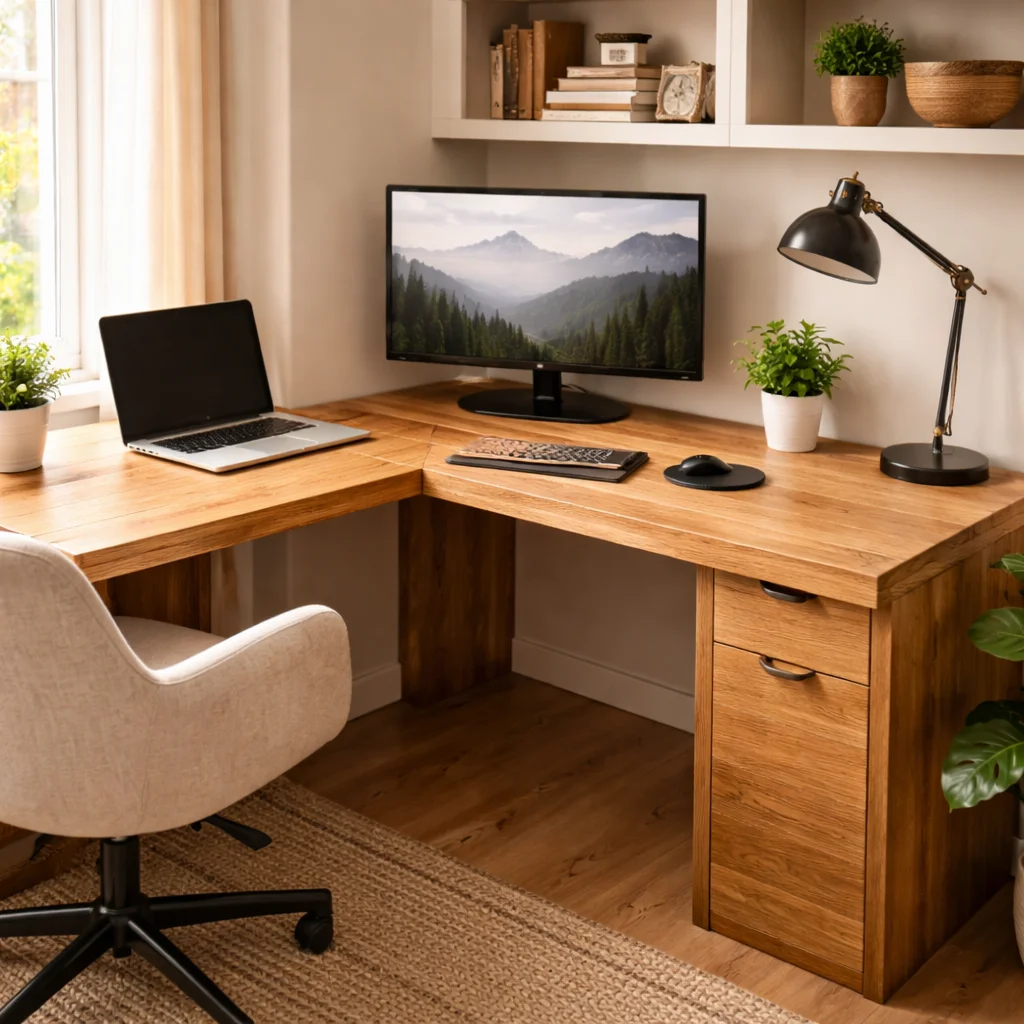
Your home office desk is where you spend most of your working day. It deserves to be exactly right.
Not almost the right size. Not almost the right height. Not a flat-pack compromise that wobbles every time you type.
A custom-built home office desk — made from solid wood, to your exact dimensions — transforms the way you work. And with the right woodworking plan, it’s a project any beginner can complete in a single weekend.
This guide shows you everything you need to know: the best designs to build, the materials that work best, and how a proper plan makes the whole process straightforward.
Working from home has changed how people think about their workspace. A cheap desk from a furniture chain was fine when the home office was temporary. Now that many people work from home permanently, the desk matters.
Building your own home office desk solves problems that retail furniture simply can’t:
A handmade home office desk is also a piece of furniture you keep. Not something you replace in three years when the surface starts peeling.
There is no single “right” desk design. The best one depends on how you work, how much space you have, and what you use the desk for.
Here are four designs worth considering — each suited to different needs and skill levels.
This is the starting point for most beginners. A writing desk is a flat top on four legs — clean, minimal, and elegant.
The top is a single wide board or a glued panel of two to three narrower boards. The legs are square timber posts, joined to the top through a simple apron frame. Assembly uses pocket screws throughout. No complex joints. No specialist tools.
A pine writing desk with tapered legs takes one day to build and costs around $80–$120 in materials. Stained in walnut or ebony, it looks like a $600 designer piece.
Best for: laptops, writing, minimal setups, small rooms.
An L-shaped desk doubles your usable surface area without doubling your footprint. It fits neatly into a corner and creates a natural separation between different work zones — laptop on one side, second monitor and peripherals on the other.
The build is two desks joined at the corner with a shared support leg. Each side is constructed independently and bolted together. The most important detail is getting the corner join level and square — a good home office desk woodworking plan specifies exactly how to do this.
Use 44mm thick pine or poplar for a desk that feels genuinely solid. Finish the surface with a hard-wearing desk lacquer to protect against scratches and moisture.
Best for: dual monitor setups, creative professionals, anyone who needs serious workspace.
Standing desks are expensive to buy. The motorised frames that sit beneath them, however, are available online for $200–$300. Pair one with a handmade timber top and you have a premium standing desk for well under the retail price.
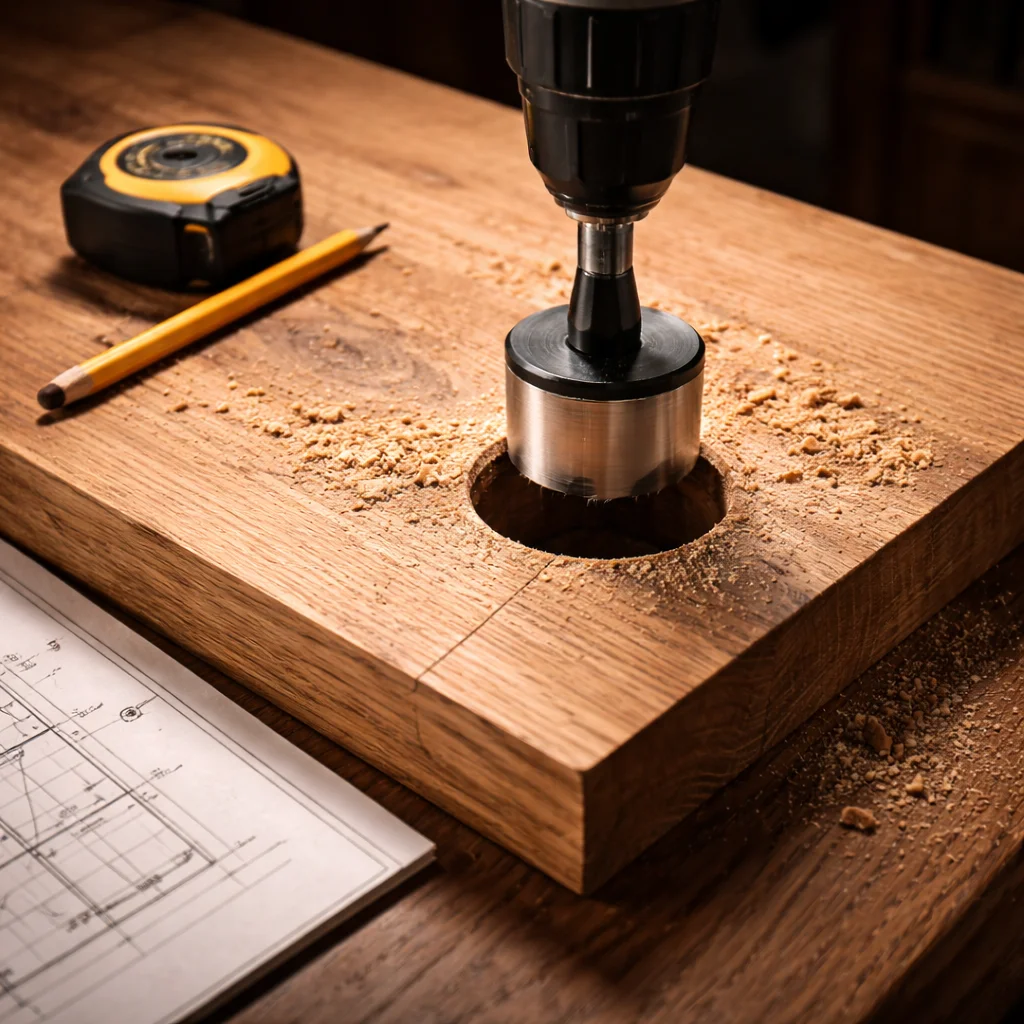
The top is the entire build. Cut a solid timber slab or a laminated panel to your desired dimensions. Sand it to 220 grit. Apply three coats of hard-wearing oil or lacquer. Drill mounting holes to fit the frame manufacturer’s spec.
The result is a standing desk with a beautiful solid wood surface — the kind that costs $1,200+ from specialist retailers — for around $350–$450 all in.
Best for: people who already know they want a standing desk, remote workers investing in their setup.
A floating wall desk is mounted directly to the wall with no legs. It saves floor space, looks architecturally clean, and is ideal for compact home offices, bedroom desks, and alcove spaces.
The build is a timber slab — typically 600–700mm deep and as wide as your wall allows — supported by a French cleat or heavy-duty wall brackets. The surface needs to be thick enough to feel solid: 44mm is the minimum for a desk you’ll lean on.
Install into wall studs for a secure fixing. A floating wall desk rated for 80kg can hold two monitors, a laptop stand, and everything on your desk comfortably.
Best for: small rooms, minimalist interiors, alcoves and recesses, secondary workspaces.
The material defines how your desk looks, feels, and lasts. Here are the main options:
Every DIGITRISER home office desk plan specifies the recommended material, thickness, and finish for that specific design.
A home office desk has to be structurally sound, level, and built to survive years of daily use. That means a good woodworking plan is essential.
Look for a plan that includes:
Without these details, a desk build becomes a guessing game. With them, it’s a clear, satisfying process with a predictable result.
The DIGITRISER Woodworking Plans E-book includes a full range of home office desk plans — from the simple writing desk to the L-shaped corner build. Each one is written and tested with beginners in mind.
[Download the DIGITRISER E-book and build your dream home office desk this weekend →]
This is the question most people ask first.
The honest answer depends on the design and your experience level. Here’s a realistic breakdown:
First-time builders should add 20–30% to these estimates. As your confidence grows, you’ll build faster. But even on your first desk build, the result is worth the time.
Your home office desk is one of the most used pieces of furniture you own. It shapes your posture, your productivity, and how you feel about your workspace every single day.
A custom-built desk — made from solid timber, to your exact specifications — is the upgrade your home office actually deserves.
With the right home office desk woodworking plan, you can build it in a weekend. You’ll save money, gain a skill, and end up with a desk that’s entirely yours.
Stop settling for furniture that almost fits. Build the one that does.
[Get your DIGITRISER home office desk plans and start building this weekend →]
Is it hard to build a home office desk from scratch?
No — a basic writing desk or floating wall desk is one of the most beginner-friendly woodworking projects you can take on. The build uses straight cuts and pocket screw joinery throughout. With a complete home office desk woodworking plan that includes a cut list and assembly sequence, most beginners finish their first desk in a single day.
What is the best wood for a home office desk?
Oak is the best choice for a desk you want to keep long-term — it’s dense, durable, and handles daily use without surface protection. Pine is the most affordable and beginner-friendly option, ideal when finished with a hard lacquer. For painted desks, poplar gives the smoothest result. Birch plywood is excellent for large, wide surfaces that need to stay flat.
How much does it cost to build a home office desk yourself?
A pine writing desk costs approximately $80–$120 in timber and hardware. An oak L-shaped desk runs $150–$250 depending on size. Both are significantly less expensive than comparable retail options, which typically start at $300–$400 for pine and $800+ for solid hardwood. The investment in a quality woodworking plan pays for itself many times over in materials savings alone.
We’re here to help! Whether you need guidance on choosing the right plans or have questions about our recommendations, our team is ready to assist. Reach out anytime—your success is our priority.