DIY Wooden Cabinet Plans for Every Room




Digitriserkamal
10 April 2026
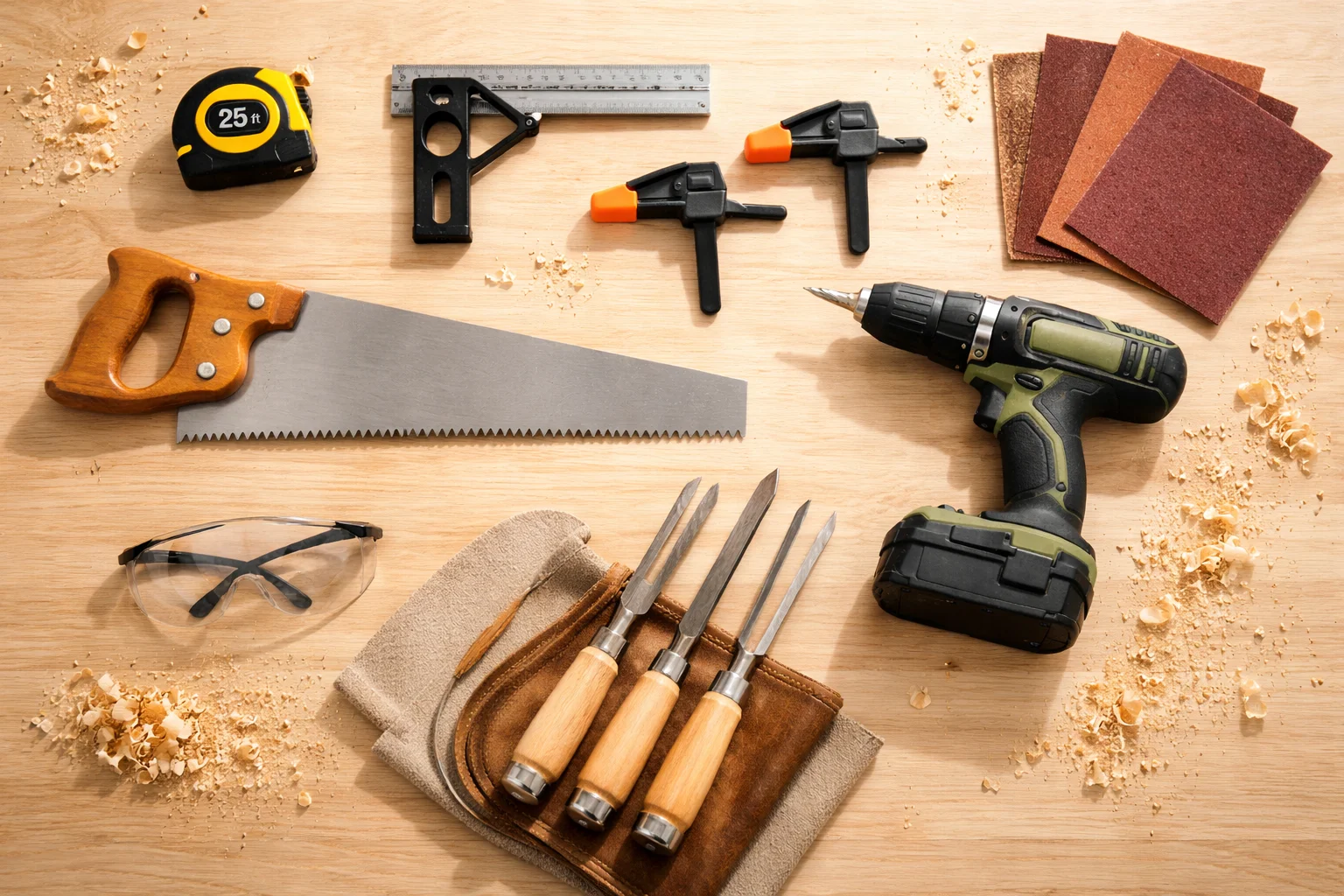
You want to start woodworking — but you don’t know which tools to buy first.
Walk into a hardware store and the choice is overwhelming. Hundreds of tools, dozens of brands, and price tags that range from $10 to $500. It’s easy to either buy too much and waste money, or buy the wrong things and get stuck halfway through your first project.
This guide cuts through the noise. It covers the essential woodworking tools for beginners — nothing more, nothing less. You’ll know exactly what to buy, why each tool matters, and how to get started without breaking the bank.
The tools you start with shape your experience as a beginner.
The right tools make cutting easier, results more accurate, and the whole process more enjoyable. The wrong tools make even simple tasks frustrating — and frustration is the number one reason beginners quit.
You don’t need a fully equipped workshop on day one. You need a small, well-chosen set of tools that covers the basics. As your skills grow, your toolkit grows with them.
Let’s start with the essentials.
Every project starts with measurement. A good tape measure is non-negotiable.
Choose a 25-foot tape with a wide, stiff blade. The wider the blade, the further it extends without bending. This matters when you’re measuring across a long board alone.
Look for these features:
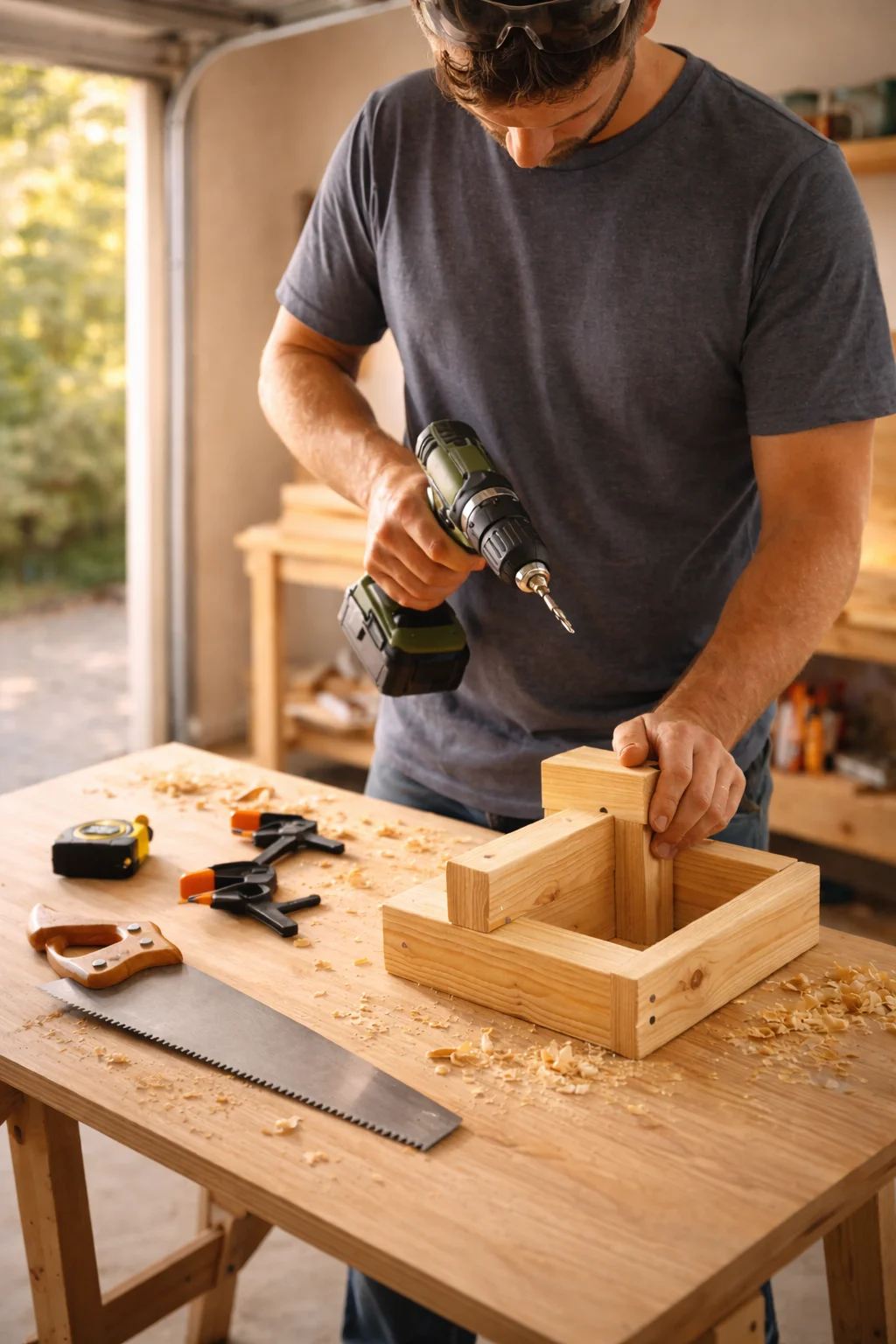
A quality tape measure costs around $15–$25. Don’t skip this for a cheaper option — accuracy saves wood.
A combination square does two things: it checks whether corners are perfectly square, and it marks straight lines across a board.
Most beginner mistakes come from cuts that are slightly off-square. This small, inexpensive tool prevents that.
Use it to:
A reliable combination square costs around $20. It’s one of the best investments you’ll make early on.
You need something to cut wood. For beginners, there are two solid options.
The hand saw is the low-cost starting point. It’s quiet, portable, and safe. A good hand saw handles most beginner projects without any issues. Choose one with around 10–12 teeth per inch (TPI) for general-purpose cutting.
The circular saw is faster and more versatile. It handles sheet materials, long straight cuts, and higher volumes of work with ease. It requires a little more practice to use safely, but it’s worth learning early.
If your budget allows, start with the circular saw. If not, a hand saw gets the job done for every project in the DIGITRISER beginner plans.
A cordless drill is arguably the single most useful tool in any beginner’s toolkit.
You’ll use it to:
Choose a drill with at least 18V of power and two battery packs. Two batteries means you’re never waiting for a charge mid-project.
Brands like DeWalt, Makita, and Ryobi all offer solid beginner-friendly options in the $80–$150 range.
Sanding is the step that separates a rough project from a polished one.
You need three grits at minimum:
Always sand in the direction of the wood grain. Going against it creates scratches that are visible once you apply stain or varnish.
Buy a sanding block to hold the paper flat. This gives you more control and a more even finish than sanding by hand alone.
Clamps are the extra hands you don’t have.
When you glue two pieces together, you need pressure while the glue dries. When you’re making a cut, you need the wood held firmly in place. Clamps handle both.
Start with:
You’ll find yourself wishing for more clamps as you take on bigger projects. Most experienced woodworkers say the same thing: you can never have too many.
Budget around $10–$20 each for a good quality F-clamp.
A basic chisel set lets you clean up joints, pare wood to fit, and add small details that make a project look intentional.
You don’t need an expensive set to start. A four-piece set with ¼, ½, ¾, and 1-inch chisels handles the vast majority of beginner tasks.
Keep them sharp. A dull chisel is harder to control and more dangerous than a sharp one. A simple sharpening stone costs around $15 and extends the life of your tools significantly.
A wooden or rubber mallet is used alongside your chisels and for tapping joints into place.
Never hit a chisel with a metal hammer — it damages the handle and your control. A mallet delivers a controlled, consistent strike that keeps you accurate.
A basic wooden mallet costs under $20. It’s a small buy that protects your more expensive tools.
You need a stable surface to work on.
A proper workbench is ideal, but not essential at the start. A pair of sawhorses (around $30–$50 for a basic set) gives you a flexible, portable work surface for cutting and assembling.
Place a sheet of plywood across two sawhorses and you have an instant workbench. It’s not glamorous, but it works perfectly well for every beginner project.
No tool list is complete without mentioning protection.
Every time you work with wood, you need:
Safety gear is cheap. The consequences of ignoring it are not. Make it a habit from your very first project.
If you’re starting from zero with a limited budget, here’s the order of priority:
This basic kit costs around $150–$200 in total. It covers every project in the DIGITRISER beginner plans and gives you a solid foundation to build from.
Having the right tools is only half the equation. Knowing exactly how to use them — in the right order, for the right cuts — is what turns raw timber into a finished piece.
That’s where a good woodworking plan makes all the difference.
The DIGITRISER Woodworking Plans E-book includes full plans for 30+ beginner and intermediate projects. Each plan lists exactly which tools you’ll need, the precise measurements to cut, and a step-by-step assembly sequence.
No guesswork. No wasted timber. Just clear instructions and confident results.
[Download the DIGITRISER E-book and start your first build today →]
Building your first woodworking toolkit doesn’t have to be complicated or expensive.
Start with the ten essential woodworking tools for beginners listed in this guide. Focus on quality over quantity. And choose projects that match the tools you already have — not the ones you wish you had.
As your skills improve, your toolkit will grow naturally. Every new project teaches you something, and every new tool opens up new possibilities.
Pick up your tape measure, grab a plan, and build something this weekend.
What are the most essential woodworking tools for a complete beginner?
The most important tools to start with are a tape measure, a combination square, a cordless drill, a hand saw, and sandpaper. These five tools cover the majority of beginner projects and give you a solid foundation without overspending.
How much does a beginner woodworking toolkit cost?
A functional beginner toolkit costs between $150 and $250. This covers a cordless drill, hand saw, tape measure, combination square, clamps, and safety gear. You don’t need to spend more than this to start building real, quality pieces.
Do I need a workshop to start woodworking as a beginner?
No — a dedicated workshop is not necessary at the start. A pair of sawhorses and a flat outdoor space or a garage floor is enough to complete most beginner projects. Many woodworkers start this way and build their workspace gradually over time.
We’re here to help! Whether you need guidance on choosing the right plans or have questions about our recommendations, our team is ready to assist. Reach out anytime—your success is our priority.