Types of Wood for Woodworking: Which One Should You Use?




Digitriserkamal
11 April 2026
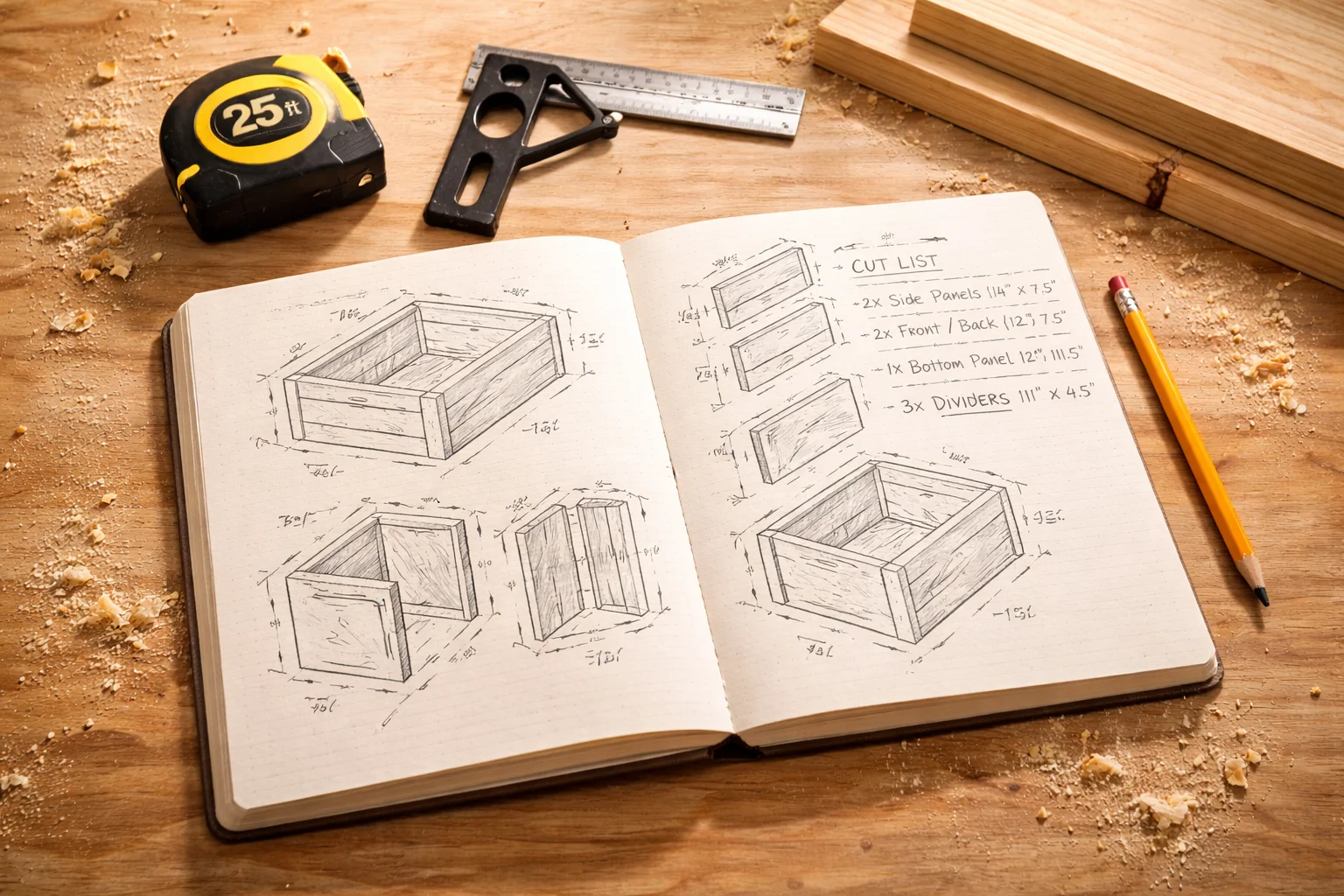
Every beginner makes the same mistake on their first project: they start without a proper woodworking plan.
They measure roughly, cut by eye, and figure out the assembly as they go. The result is usually a pile of wasted timber, a crooked joint, and a project that ends up in the bin instead of the living room.
A woodworking plan changes everything. It tells you exactly what to cut, in what order, and how to put it all together. In this article, you’ll discover why working from a plan is the single best habit you can build as a beginner — and how it saves you real time and real money.
A woodworking plan is a complete set of instructions for building a specific piece of furniture or object.
A good plan includes:
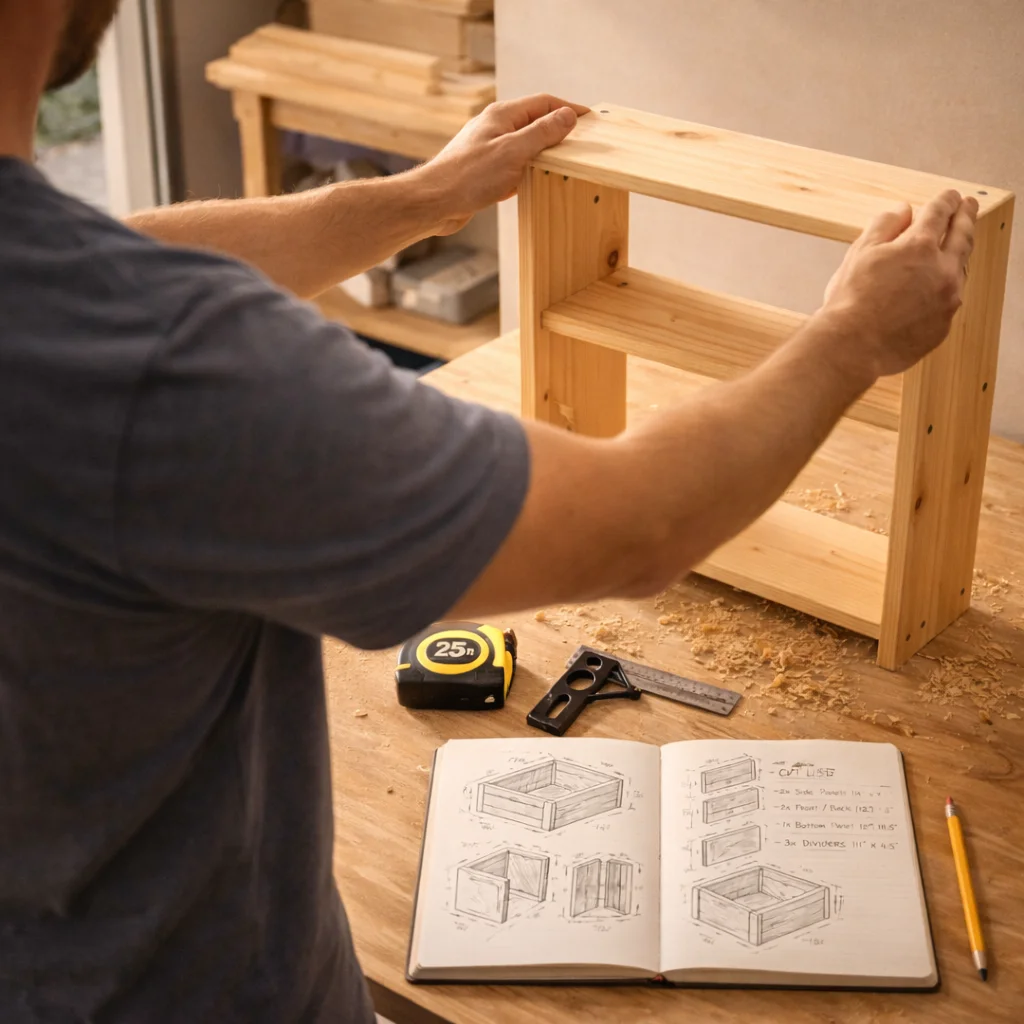
Think of it like a recipe. A recipe tells you exactly what ingredients you need and what to do with them. A woodworking plan does the same for timber and tools.
Without it, you’re cooking blind.
Most beginners underestimate how quickly mistakes add up.
You buy timber based on a rough estimate. You cut a piece slightly wrong and it won’t fit. You drive back to the hardware store for more wood. You waste an hour trying to fix a joint that was never going to work.
Here’s what that actually costs you:
A $20 plan can save you $80 worth of timber and a full afternoon of frustration. The maths is straightforward.
A plan lists every single piece you need to cut, with exact measurements. You set up your cuts in advance, batch similar lengths together, and work through the list efficiently.
No stopping. No re-measuring. No second-guessing.
Most beginners buy either too much (wasted money) or too little (wasted time going back to the shop).
A proper cut list tells you exactly how much material to buy. You walk into the hardware store with a list. You walk out with exactly what you need.
Putting pieces together in the wrong order is a surprisingly common beginner mistake. You can end up in a position where you can’t physically reach a screw, or where a joint is blocked by another piece you’ve already fixed in place.
A good woodworking plan sequences the assembly steps for you. Each step builds logically on the last.
Cutting a piece 5mm too short means starting again. In woodworking, you can’t add material back — you can only remove it.
A plan includes tolerances and notes that flag where precision matters most. Follow it carefully and you avoid the mistakes that force you to recut.
When you know exactly what comes next, you move faster. There’s no stopping to think, no flipping through internet tutorials mid-build, no standing over the project wondering what to do.
A clear woodworking plan turns a confused afternoon into a productive one.
Timber is the biggest cost in most projects. A plan includes an optimised cut layout — showing you how to arrange your cuts on each board to minimise offcuts and waste.
This alone can reduce your timber cost by 15–25% on a medium-sized project.
A single wrong cut on a hardwood plank can cost you $30 or more. Plans prevent the kind of errors that lead to scrapped material.
Different projects require different types of timber. A plan specifies the right species, grade, and thickness for the job. You don’t waste money buying the wrong material.
Screws, bolts, hinges, brackets — buying the wrong sizes means another trip to the store. A materials list in a good plan is specific down to the size and quantity of every fastener.
Confidence built from a successful first project means you’re less likely to rush, cut corners, or make expensive impulsive decisions on the next one. Good habits compound.
It’s fair to ask: can’t I just find free plans online?
You can. But free tutorials are often incomplete, poorly measured, or designed for a different skill level. They assume you already know things you might not know yet. They skip steps. They use non-standard dimensions.
A professionally designed woodworking plan is:
The difference between a free tutorial and a quality plan is the difference between a rough sketch and a proper blueprint.
Not all plans are created equal. Before you download or purchase one, check for these qualities:
If a plan is missing any of these, it will likely slow you down more than it helps.
The DIGITRISER Woodworking Plans E-book was designed with exactly these principles in mind.
Every plan in the collection includes a full cut list, materials list, tool requirements, and step-by-step assembly instructions with diagrams. Projects are graded by difficulty, so you can start with the simplest builds and work up at your own pace.
Whether you want to build a bookshelf, a coffee table, a garden bench, or a storage crate — the plan is already written. All you need to do is follow it.
[Get the DIGITRISER Plans E-book and build your first project with confidence →]
A woodworking plan is not a shortcut. It’s the smart way to work.
It saves you money on timber. It saves you hours of frustration. It gives you the confidence to start — and the clarity to finish.
Every professional woodworker works from a plan. Now you know why.
Stop guessing. Start building.
Why is it important to use a woodworking plan as a beginner?
A woodworking plan gives you exact measurements, a cut list, and step-by-step instructions before you start. This prevents costly mistakes, reduces wasted timber, and makes your first build far more likely to succeed. It’s the single most effective habit a beginner can build.
Can a woodworking plan really save me money?
Yes — significantly. A proper plan tells you exactly how much timber to buy and how to cut it efficiently. It also prevents errors that force you to buy replacement material. On an average beginner project, working from a plan can save 15–25% on material costs alone.
Where can I find quality woodworking plans for beginners?
The DIGITRISER Woodworking Plans E-book is a complete library of beginner and intermediate plans, each with cut lists, diagrams, and full assembly instructions. It’s designed specifically for people who are just starting out and want professional-quality results without the guesswork.
We’re here to help! Whether you need guidance on choosing the right plans or have questions about our recommendations, our team is ready to assist. Reach out anytime—your success is our priority.