Types of Wood for Woodworking: Which One Should You Use?




Digitriserkamal
12 April 2026
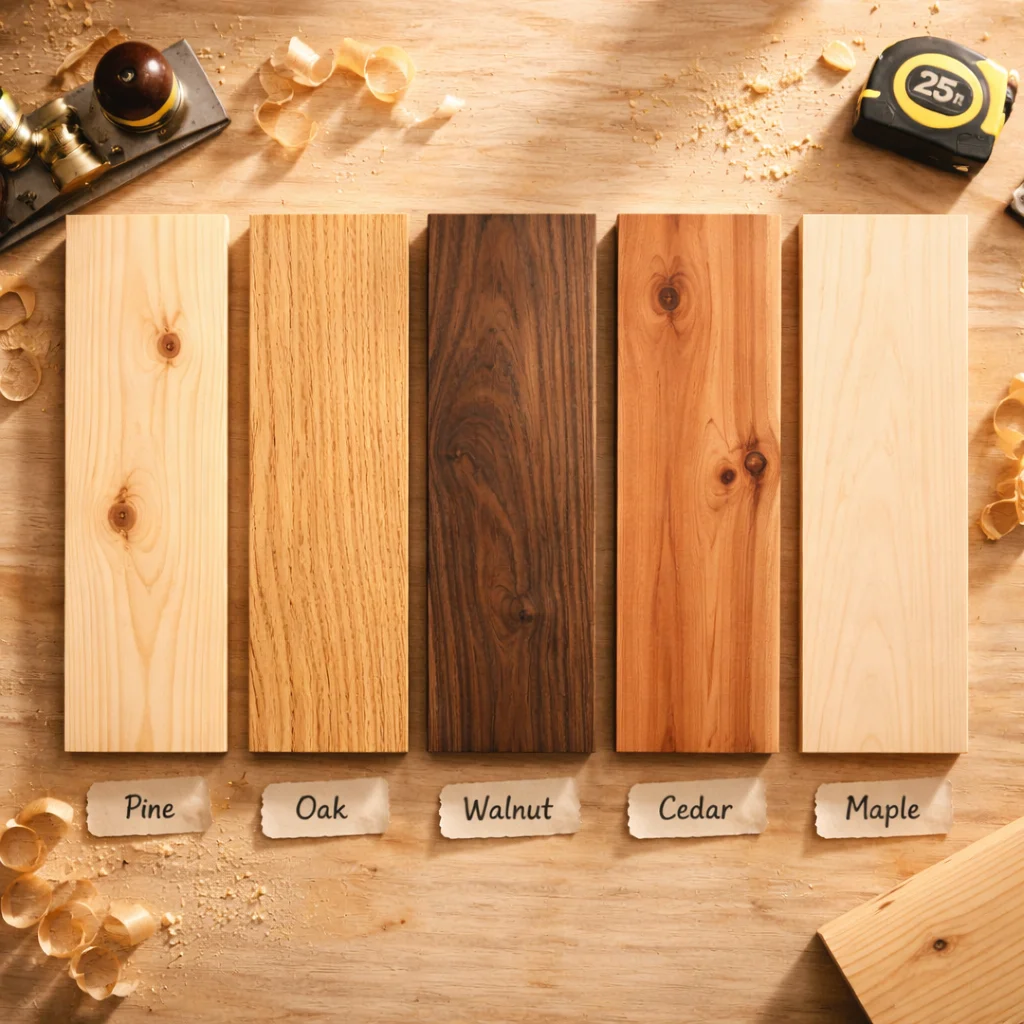
Choosing the right wood is one of the most important decisions you make on any project.
Pick the wrong type and you’ll struggle with every step — difficult cuts, poor finishes, joints that don’t hold. Pick the right one and the whole build flows naturally from start to finish.
But with dozens of types of wood available at any hardware store, how do you know which one to choose? This guide breaks it down clearly. You’ll learn the main categories, the most common species, and exactly which type of wood to use depending on your project, your budget, and your skill level.
Before diving into specific species, you need to understand the fundamental split in types of wood for woodworking: hardwood and softwood.
This distinction isn’t really about physical hardness — it’s botanical. But it does have a real impact on how each type behaves in the workshop.
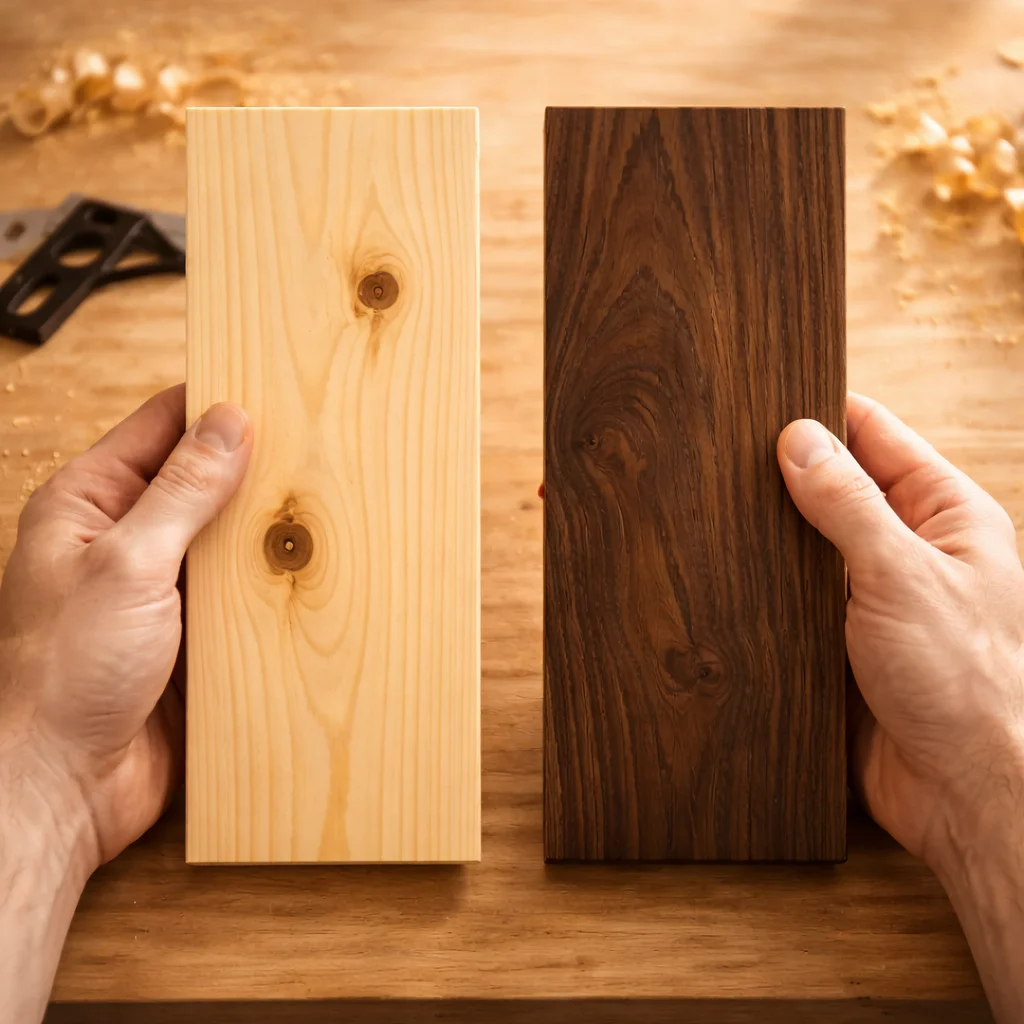
Hardwood comes from deciduous trees — trees that lose their leaves in autumn.
Common hardwoods include:
Hardwoods are denser, more durable, and more resistant to dents and scratches. They take stains and finishes beautifully. However, they’re harder to cut, require sharper tools, and cost significantly more than softwoods.
They’re ideal for furniture that needs to last decades — dining tables, chairs, hardwood flooring, and heirloom pieces.
Softwood comes from coniferous trees — evergreens like pine and spruce.
Common softwoods include:
Softwoods are lighter, easier to cut, and considerably cheaper. They’re widely available at every hardware store. They’re more prone to dents and scratches, but for painted pieces or structural work, that rarely matters.
For beginners, softwood — especially pine — is the natural starting point.
Pine is the most beginner-friendly wood available. It’s affordable, widely available, and easy to work with hand tools and power tools alike.
It takes paint well and accepts stain with good preparation. The knots in pine give it a rustic character that many people find appealing.
Best for: shelves, storage crates, coat racks, children’s furniture, painted projects.
Watch out for: pine dents easily — avoid it for tabletops that will take heavy daily use.
Oak is the most popular hardwood for furniture making. It’s strong, stable, and has a beautiful open grain that looks exceptional with a clear oil or wax finish.
White oak and red oak are the two main varieties. White oak is slightly more water-resistant, making it a better choice for kitchen and bathroom projects. Red oak has a warmer, more reddish tone.
Oak costs roughly two to three times more than pine. But a well-built oak piece lasts a lifetime.
Best for: dining tables, coffee tables, bookshelves, kitchen worktops, quality furniture.
Watch out for: oak is heavy and requires sharp, well-maintained tools to cut cleanly.
Plywood isn’t a single species — it’s a manufactured panel made from thin layers of wood veneer glued together. And it’s one of the most useful materials in any beginner’s toolkit.
Its layered construction makes it extremely stable. It doesn’t warp or split the way solid timber can. It’s also available in large sheets, making it ideal for cabinet backs, drawer bottoms, and large flat surfaces.
Types of plywood vary by grade:
Best for: cabinet carcasses, drawer bases, table underlays, workshop jigs, shelving.
Watch out for: the edges of plywood are unattractive — cover them with edge banding or solid timber strips.
Walnut is one of the most beautiful woods available. Its rich, dark chocolate tones and straight grain make it a favourite for premium furniture and decorative pieces.
It’s also one of the most expensive hardwoods. A walnut board costs three to five times more than an equivalent pine board. For that reason, most beginners save walnut for accent pieces, small projects, or once they’ve built up their skills.
Best for: cutting boards, decorative boxes, handles, chair legs, statement furniture pieces.
Watch out for: the cost. Don’t practice new techniques on walnut — use pine first.
Cedar is a softwood with a natural superpower: it’s highly resistant to rot, moisture, and insects. This makes it the go-to choice for outdoor projects.
It’s lightweight, easy to cut, and has a pleasant, distinctive smell. It doesn’t need to be sealed or painted for outdoor use, though a protective oil extends its life considerably.
Best for: garden planters, outdoor furniture, raised garden beds, storage chests.
Watch out for: cedar can be splintery — sand it well before finishing.
Maple is a dense, pale hardwood with an exceptionally smooth surface. It machines cleanly, takes a beautiful finish, and stands up to heavy use.
Hard maple — the denser variety — is the standard material for butcher’s blocks and workbench tops. Soft maple is more workable and used widely in furniture.
Best for: workbenches, butcher blocks, kitchen items, painted furniture (the smooth surface takes paint perfectly).
Watch out for: maple can be tricky to stain evenly — test on an offcut before committing.
With so many types of wood for woodworking, the choice can feel overwhelming. Use these three questions to narrow it down quickly.
3. What’s your budget? If you’re learning, start with pine. It’s forgiving, cheap, and perfect for building skills. Save the expensive hardwoods for projects where you’re confident in your technique.
Some types of wood are best left to experienced woodworkers:
Stick to kiln-dried, construction-grade or furniture-grade timber from a reputable supplier and you’ll avoid most problems.
Choosing the right wood matters. But using it correctly matters just as much.
Every DIGITRISER woodworking plan specifies exactly which wood species to use, what grade to buy, and how much to purchase. You don’t have to guess. The plan does that work for you.
Whether you’re building a pine bookshelf for the hallway or an oak coffee table for the living room, the right plan makes the right wood go further.
[Explore the DIGITRISER Woodworking Plans E-book — plans for every wood type and skill level →]
Understanding the types of wood for woodworking is a skill that pays off on every single project.
Start with pine. Build your confidence. Then move on to oak, walnut, or cedar as your skills and ambitions grow. Choose the right wood for the right job, and your projects will look and last better from day one.
The right plan tells you exactly which wood to use. The rest is up to you.
[Download your DIGITRISER plans and start your next project today →]
What is the best type of wood for woodworking beginners?
Pine is the best starting point for most beginners. It’s affordable, easy to cut, widely available, and forgiving of small mistakes. It works well for painted projects and rustic finishes. Once you’re comfortable with pine, oak and poplar are excellent next steps.
What is the difference between hardwood and softwood in woodworking?
Hardwood comes from deciduous trees like oak and walnut. It’s denser, more durable, and more expensive. Softwood comes from coniferous trees like pine and cedar. It’s lighter, easier to work with, and more affordable. Both have their place — the right choice depends on your project and budget.
Which types of wood are best for outdoor woodworking projects?
Cedar and redwood are the top choices for outdoor projects because they’re naturally rot-resistant and handle moisture well. Pressure-treated pine is another option for structural outdoor use. Always apply an exterior oil or sealant to extend the life of any outdoor piece.
We’re here to help! Whether you need guidance on choosing the right plans or have questions about our recommendations, our team is ready to assist. Reach out anytime—your success is our priority.