Best Way to Sand Furniture Before Painting




Digitriserkamal
26 April 2026
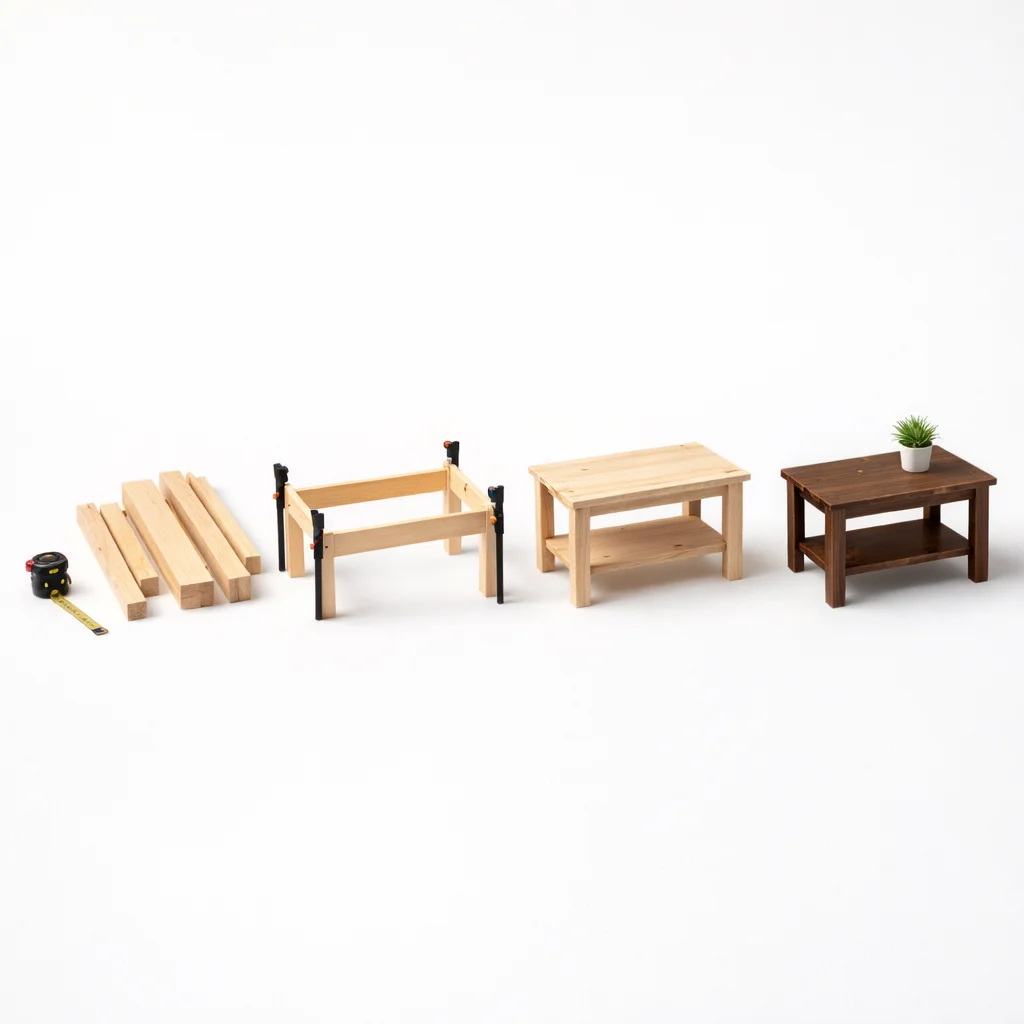
It’s one of the first questions every beginner asks before starting a project: how long is this actually going to take?
The honest answer depends on several things — your experience level, the design you choose, the tools you have, and how much time you can dedicate in one session. But for a wooden coffee table, most beginners can expect to spend one to two full days from first cut to finished surface.
This guide breaks down exactly where that time goes, which stages take longer than people expect, and how to plan your build so you finish on schedule — not a week later than you planned.
Underestimating build time is one of the most common frustrations in woodworking.
You plan a Saturday project. By Sunday evening, the table is half built, the glue hasn’t cured, and the finish isn’t on yet. The living room is full of sawdust and unfinished timber. Monday arrives and the project stalls for two weeks.
A realistic time estimate before you start lets you plan properly. You know whether this is a one-day build or a two-day build. You schedule the glue-up for day one so it cures overnight. You start the finish on day two knowing it needs 24 hours between coats.
Planning your time is as important as planning your cuts.
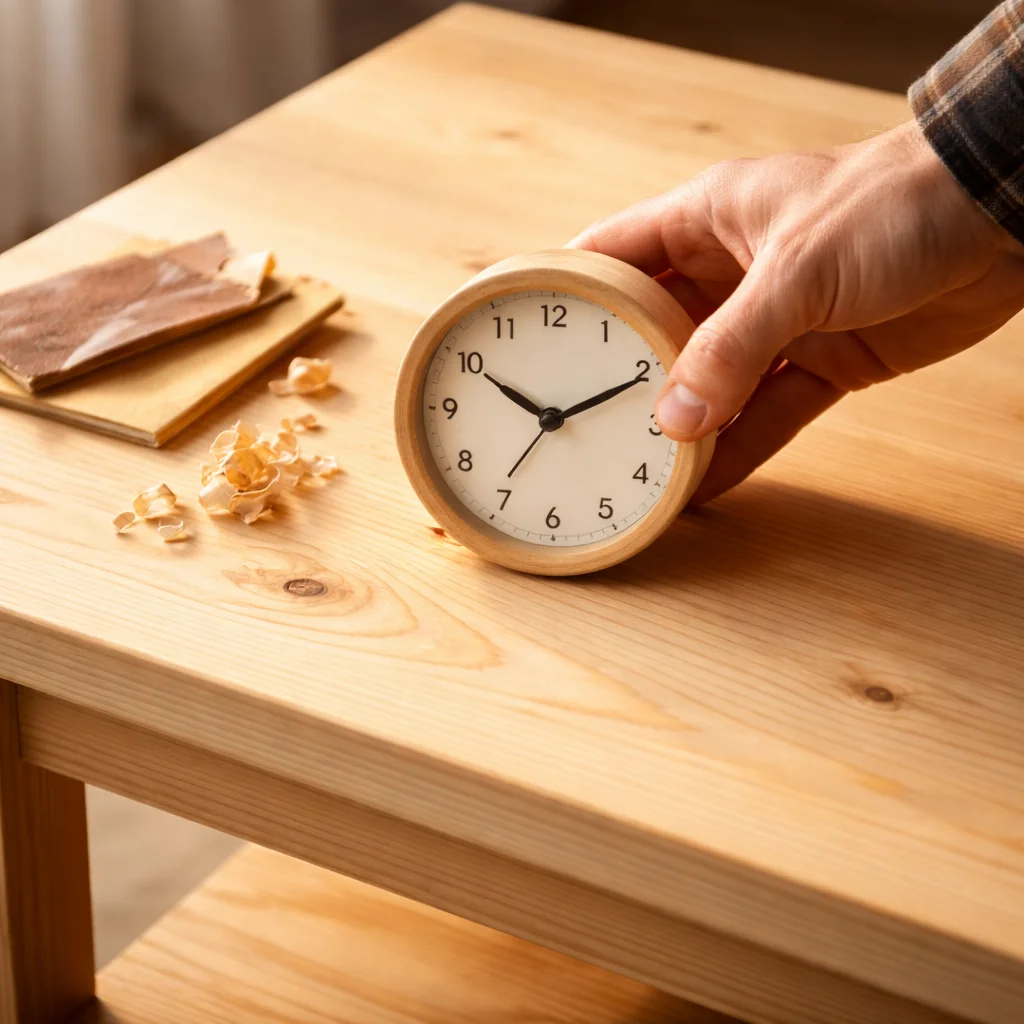
Underestimating build time is one of the most common frustrations in woodworking.
You plan a Saturday project. By Sunday evening, the table is half built, the glue hasn’t cured, and the finish isn’t on yet. The living room is full of sawdust and unfinished timber. Monday arrives and the project stalls for two weeks.
A realistic time estimate before you start lets you plan properly. You know whether this is a one-day build or a two-day build. You schedule the glue-up for day one so it cures overnight. You start the finish on day two knowing it needs 24 hours between coats.
Planning your time is as important as planning your cuts.
A circular saw and drill covers most of a basic coffee table build. Add a pocket hole jig and you halve the time spent on the apron joints. An orbital sander reduces sanding time by 70% compared to sanding by hand.
Better tools don’t just produce better results — they produce faster ones.
A beginner measures more carefully, moves more slowly, and re-reads the plan more often. That’s not a criticism — it’s how skill develops. As experience grows, each stage takes progressively less time.
Here is an honest breakdown of how long each stage of a standard four-leg pine coffee table takes — at three different experience levels.
Stage | Time |
Reading and understanding the plan | 30–45 min |
Marking and cutting all components | 1.5–2 hrs |
Dry assembly and checking for fit | 30–45 min |
Gluing and assembling the apron frame | 45–60 min |
Attaching the legs | 30–45 min |
Gluing up the tabletop (if needed) | 30 min + overnight cure |
Attaching the top to the base | 30–45 min |
Sanding (all grits, full piece) | 1.5–2 hrs |
Applying stain (optional) | 30–45 min + drying time |
Applying finish (2–3 coats) | 1 hr + drying time between coats |
Total active build time: approximately 8–11 hours Spread across: 2 full days, or 3 shorter sessions
The glue-up and finish coats require waiting time between active steps. Plan for this in advance.
Stage | Time |
Reading the plan | 15–20 min |
Cutting all components | 45–60 min |
Dry assembly | 20–30 min |
Gluing and assembling the apron frame | 30–45 min |
Attaching the legs | 20–30 min |
Gluing up the tabletop | 20 min + overnight cure |
Attaching the top to the base | 20–30 min |
Sanding | 45–60 min |
Staining and finishing | 45–60 min + drying time |
Total active build time: approximately 5–7 hours Spread across: 1 full day to 1.5 days
Total active build time: 3–5 hours Spread across: 1 day, with finish coats the following morning
At this level, cuts are made quickly, joints go together cleanly the first time, and finishing is a practiced routine rather than a careful experiment.
Even experienced woodworkers underestimate certain stages. Here are the four that most consistently surprise beginners.
Sanding a coffee table properly — working through 80, 120, 180, and 220 grit, including all four legs and the underside of the apron — takes longer than almost anyone estimates the first time.
Budget at least 90 minutes for a complete sanding job on a basic coffee table. An orbital sander reduces this significantly, but hand sanding the joints, edges, and detailed areas still adds time.
A coat of oil or varnish needs time to cure before you apply the next coat. Most products specify 4–8 hours between coats, with a full 24-hour cure before the piece goes into use.
This doesn’t add active build time — but it adds calendar time. A three-coat finish applied correctly takes three days from first coat to final cure, even if the active application time is under an hour total.
Attaching a glued-up tabletop to the apron frame using figure-8 fasteners or tabletop clips sounds simple. In practice, it requires careful positioning, checking for overhang on all four sides, and securing every fastener at the correct torque.
Budget 30–45 minutes for this step. Rushing it results in a top that isn’t centred or a fastener that’s overtightened and splits the apron.
Every time you pause to re-read a step, check a measurement, or cross-reference a diagram, build time grows. This is completely normal — and it’s exactly why having a clear, well-written woodworking plan makes such a measurable difference.
A plan with ambiguous instructions costs you 20–30 minutes of confusion at the stages where it matters most.
Speed in woodworking comes from preparation, not rushing. Here’s how to shave time off your build without sacrificing quality.
The single biggest time saver on any build is a plan that tells you exactly what to cut, in what order to assemble, and where the tricky steps are. That’s the difference between building with confidence and building with hesitation.
Every DIGITRISER woodworking plan is structured to minimise your time at every stage — from a cut list that reduces timber confusion to an assembly sequence that avoids rework.
Building a wooden coffee table takes one to two days for most beginners — and that’s time well spent.
The result is a piece of furniture that fits your space exactly, costs a fraction of retail, and carries the satisfaction of having been made by hand.
Plan your time before you start. Respect the drying time between finish coats. Follow a clear plan from beginning to end.
Do that, and your coffee table will be sitting in your living room by the weekend.
[Get your DIGITRISER woodworking plans and start building your coffee table today →]
How long does it take a beginner to build a coffee table?
A complete beginner can expect to spend 8–11 hours of active build time on a simple four-leg wooden coffee table. Spread across two full days, this allows time for glue to cure overnight and finish coats to dry between sessions. Having a clear, detailed woodworking plan reduces this time significantly by eliminating confusion at each stage.
What is the fastest type of coffee table to build?
The fastest coffee table to build is a simple flat-top design with four straight legs and a pocket-screw apron frame. This design uses no complex joinery, requires minimal tools, and can be completed in a single day by a beginner. Adding a lower shelf, angled legs, or a glued-up panel top all increase build time but also improve the visual result.
Does the finish add a lot of time to a coffee table build?
The finish adds significant calendar time but relatively little active build time. Applying two to three coats of oil or varnish takes 45–60 minutes in total. However, each coat needs 4–8 hours to dry before the next is applied, and the final coat needs 24 hours to cure fully before use. Plan your finishing schedule in advance so drying time doesn’t stall your progress.
We’re here to help! Whether you need guidance on choosing the right plans or have questions about our recommendations, our team is ready to assist. Reach out anytime—your success is our priority.