Best Way to Sand Furniture Before Painting




Digitriserkamal
25 July 2026
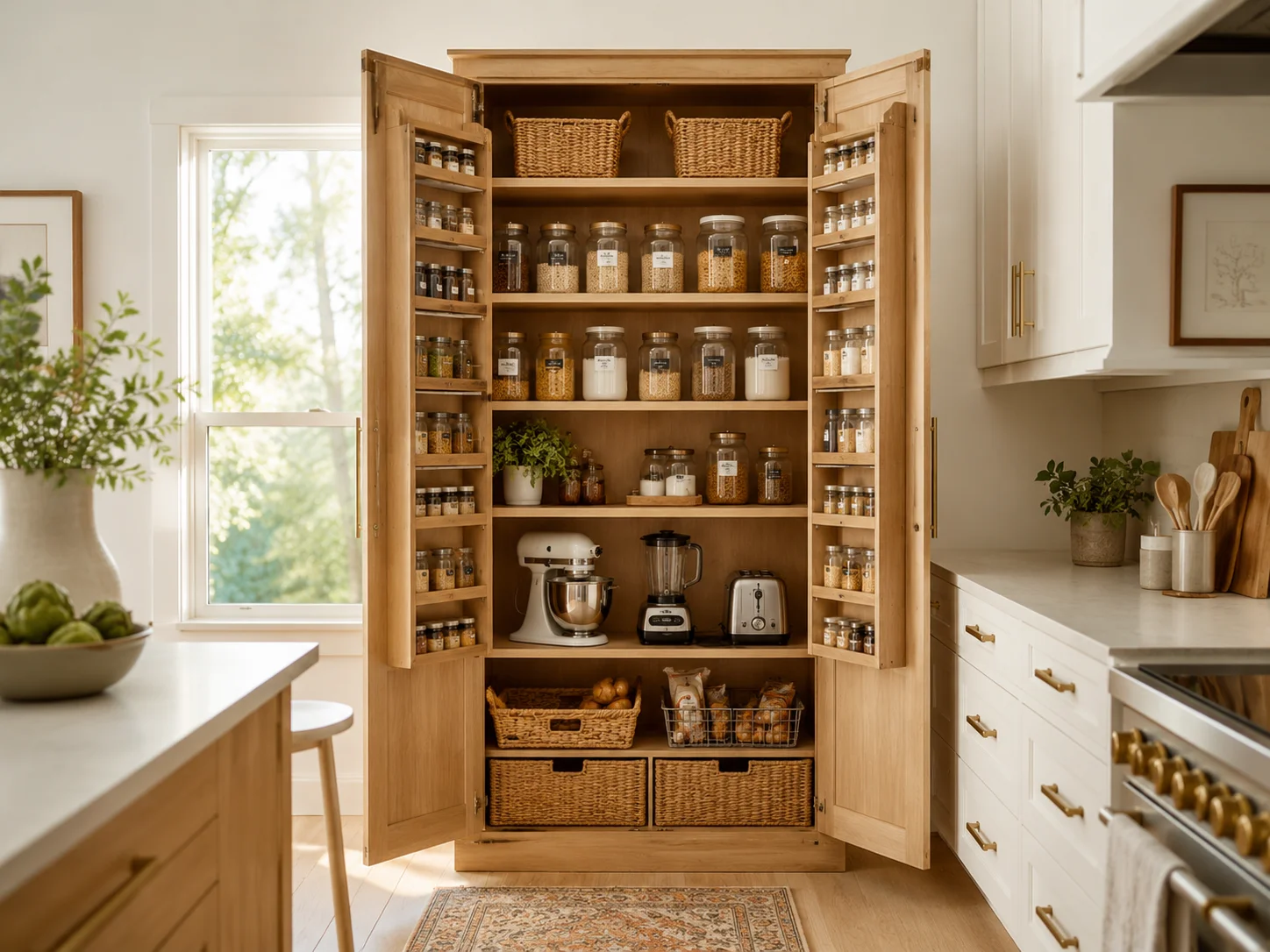
A well-organized kitchen makes cooking, cleaning, and meal preparation easier. However, standard cabinets and store-bought organizers do not always make the best use of the available space. With practical Woodworking Plans for Kitchen Storage Solutions, you can build storage that fits your kitchen, daily habits, and preferred style.
From compact spice racks to freestanding pantry cabinets, DIY storage projects can transform unused walls, narrow gaps, and crowded counters into functional areas. The right project does not need to be complicated. It simply needs clear measurements, suitable materials, and a design that solves a specific problem.
Building your own kitchen storage gives you control over size, shelf spacing, materials, and finish. This is especially useful in small kitchens or older homes, where standard furniture may not fit correctly.
Custom projects also allow you to organize items according to how you use them. Frequently used utensils can stay within reach, while larger appliances and occasional cookware can be stored in dedicated compartments.
A consistent wood tone or paint finish can also help separate projects feel like part of one coordinated kitchen design.
Many beginner-friendly kitchen storage projects require only a basic collection of tools:
Plywood is useful for cabinet boxes, shelves, and larger panels. Solid wood boards can work well for trim, open shelving, racks, and visible surfaces.
Measure the installation area before buying materials. Check nearby doors, drawers, electrical outlets, plumbing, baseboards, and appliances.
A freestanding pantry cabinet adds storage without requiring permanent changes to the kitchen. It can hold dry food, small appliances, serving dishes, and cleaning supplies.
A simple design uses a tall rectangular cabinet with several shelves and one or two doors. Adjust the shelf spacing based on the items you plan to store. Tall units should be secured appropriately to reduce the risk of tipping.
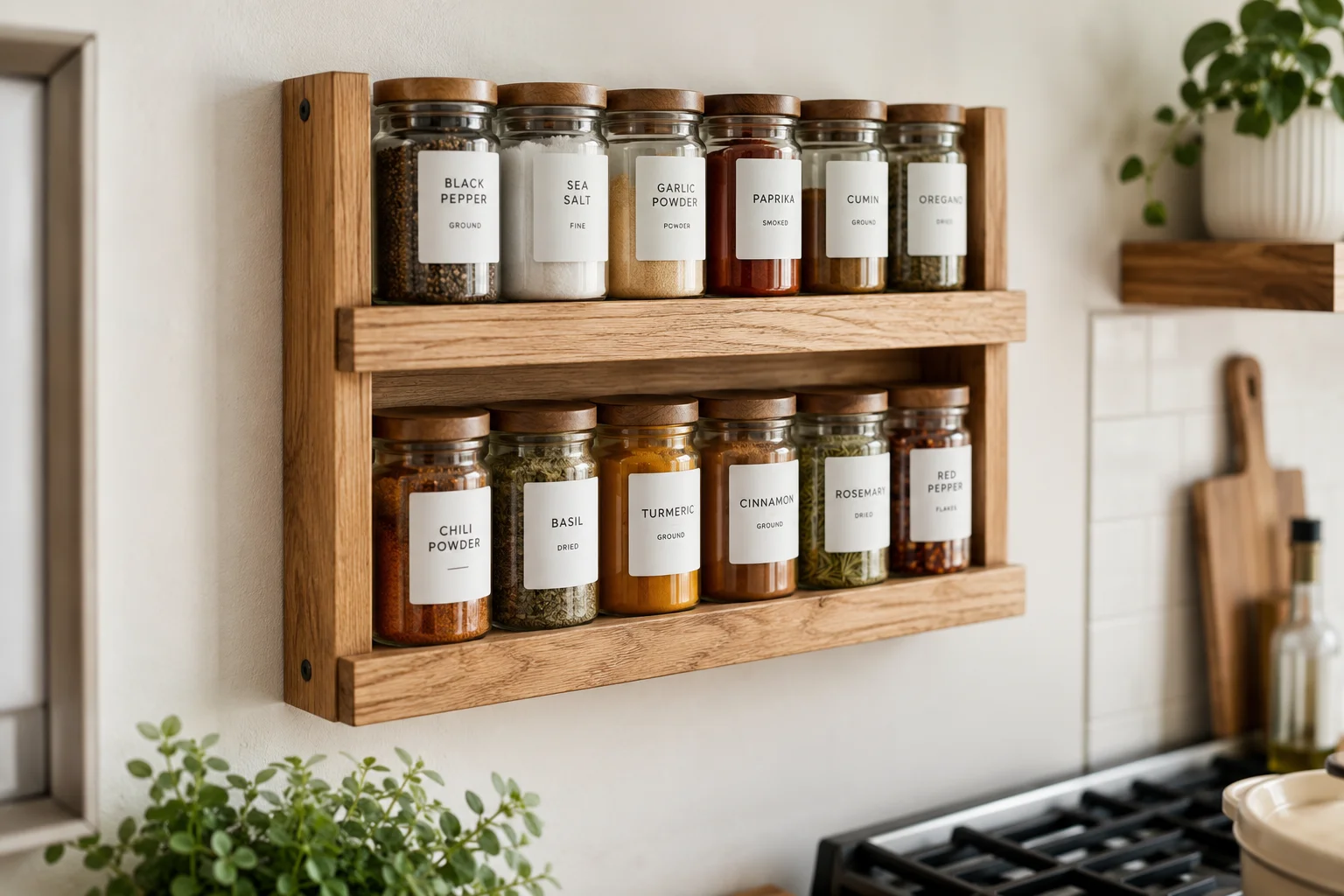
A wooden spice rack is a compact project that can free up valuable cabinet or countertop space. It can be installed on an open wall, inside a pantry, or on the inside of a suitable cabinet door.
Use shallow shelves with small front rails to keep containers in place. Measure your spice jars before deciding the shelf height and depth.
A rolling cart provides extra storage and a flexible work surface. It can be moved beside the counter during meal preparation and returned to a corner when it is no longer needed.
A practical design may include an open lower shelf, a drawer, and a solid top. Locking casters can help keep the cart stable while it is in use.
Deep cabinets often become difficult to organize because items at the back are hard to reach. Pull-out shelves can make pots, pans, containers, and pantry supplies more accessible.
This project requires accurate measurements and carefully aligned drawer slides. Measure each cabinet opening individually, as dimensions may vary slightly. Test the shelves fully before loading them.
An over-the-sink shelf can create useful storage in an area that might otherwise remain empty. It can hold soap, small plants, cleaning tools, or frequently used kitchen items.
Keep the shelf narrow enough that it does not interfere with the faucet or washing area. Use a finish suited to a space where occasional moisture or splashes may occur.
Begin by identifying the source of clutter. If food packages crowd the cabinets, a pantry may be the best project. If spices cover the counter, a wall rack could provide a faster solution.
Next, consider how often you use the stored items. Everyday tools should remain easy to reach, while seasonal or rarely used objects can be placed higher or farther away.
Choose a plan that matches your woodworking experience. Open shelves and basic racks are generally easier than drawers, doors, or pull-out mechanisms.
Finally, think about cleaning. Kitchen storage should have accessible surfaces and enough space around items to remove dust, crumbs, and spills.
Once you complete one storage project, you may notice other areas of the kitchen that could work better with a custom solution.
Our Woodworking Plans e-book gathers practical furniture and storage projects in one organized resource. It is designed for DIY builders who want clear guidance without spending hours searching through scattered instructions.
Inside, you will find step-by-step plans, measurements, material guidance, and helpful building tips for cabinets, shelves, organizers, tables, benches, and other useful home projects.
Explore our Woodworking Plans e-book and choose your next build today.
Build on a flat surface and check that cabinet boxes and shelving units remain square throughout assembly. Small alignment problems can affect doors, drawers, and final installation.
Sand visible and difficult-to-reach areas before assembling the project. Pre-drill holes near board edges and remove all dust before applying paint, stain, or a protective coating.
When mounting storage to a wall, use suitable hardware for the wall type and expected load. Confirm that shelves, brackets, and cabinets are level before placing items inside.
The right Woodworking Plans for Kitchen Storage Solutions can help you create a kitchen that is easier to use and maintain. A pantry cabinet, spice rack, rolling cart, pull-out shelf, or sink organizer can solve a specific storage problem without requiring a complete renovation.
Start with the area that causes the most frustration, measure carefully, and choose a manageable design. With a reliable plan and thoughtful construction, you can build kitchen storage that fits both your space and your routine.
A wall-mounted spice rack, open shelf, or simple countertop organizer is often a good starting project because it uses basic cuts and limited hardware.
Yes. Many projects can be completed with a circular saw and straightedge, a track saw, a miter saw, or accurately pre-cut wood panels.
Plywood works well for cabinets and shelves, while solid wood is suitable for racks, trim, and visible surfaces. The best choice depends on the project, budget, finish, and location.
We’re here to help! Whether you need guidance on choosing the right plans or have questions about our recommendations, our team is ready to assist. Reach out anytime—your success is our priority.