Best Way to Sand Furniture Before Painting




Digitriserkamal
1 August 2026
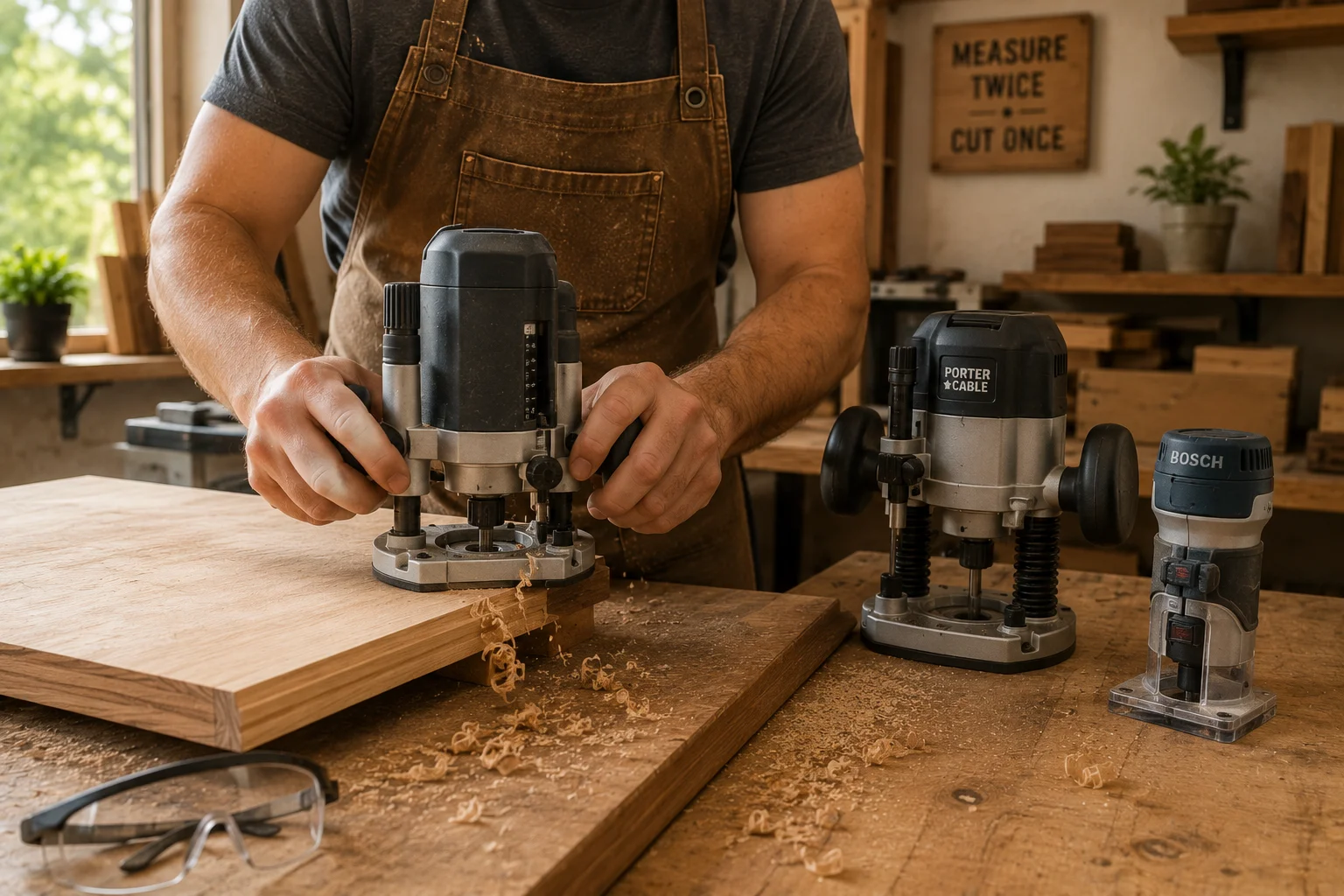
A router can transform plain boards into finished furniture components, decorative edges, grooves, joints, and precise recesses. However, choosing the Best Router for Woodworking Projects is not simply a matter of buying the most powerful model.
The right router depends on what you plan to build. A compact router may be ideal for light edge work, while a plunge router offers greater flexibility for cuts that begin inside the material. Understanding these differences will help you choose a tool that fits your projects, workspace, and experience.
A woodworking router uses a rapidly rotating bit to cut or shape wood. Depending on the bit and setup, it can create decorative profiles, grooves, mortises, dadoes, moldings, and frame-and-panel components.
Routers can be guided along the edge of a board, used with templates and jigs, or mounted under a compatible router table. This versatility makes them useful for furniture building, cabinetry, shelving, signs, and smaller decorative projects.
A compact router is lightweight and easy to control with one or two hands. It is a practical choice for rounding edges, trimming laminate, cutting shallow grooves, and completing smaller furniture details.
Many palm routers use a 1/4-inch collet and are designed around portability and close control. Current models may also offer variable speed, cordless operation, plunge-base compatibility, and dust collection.
A compact router is often the best starting point for occasional DIYers. However, it may feel limited when using larger bits or removing a significant amount of material.
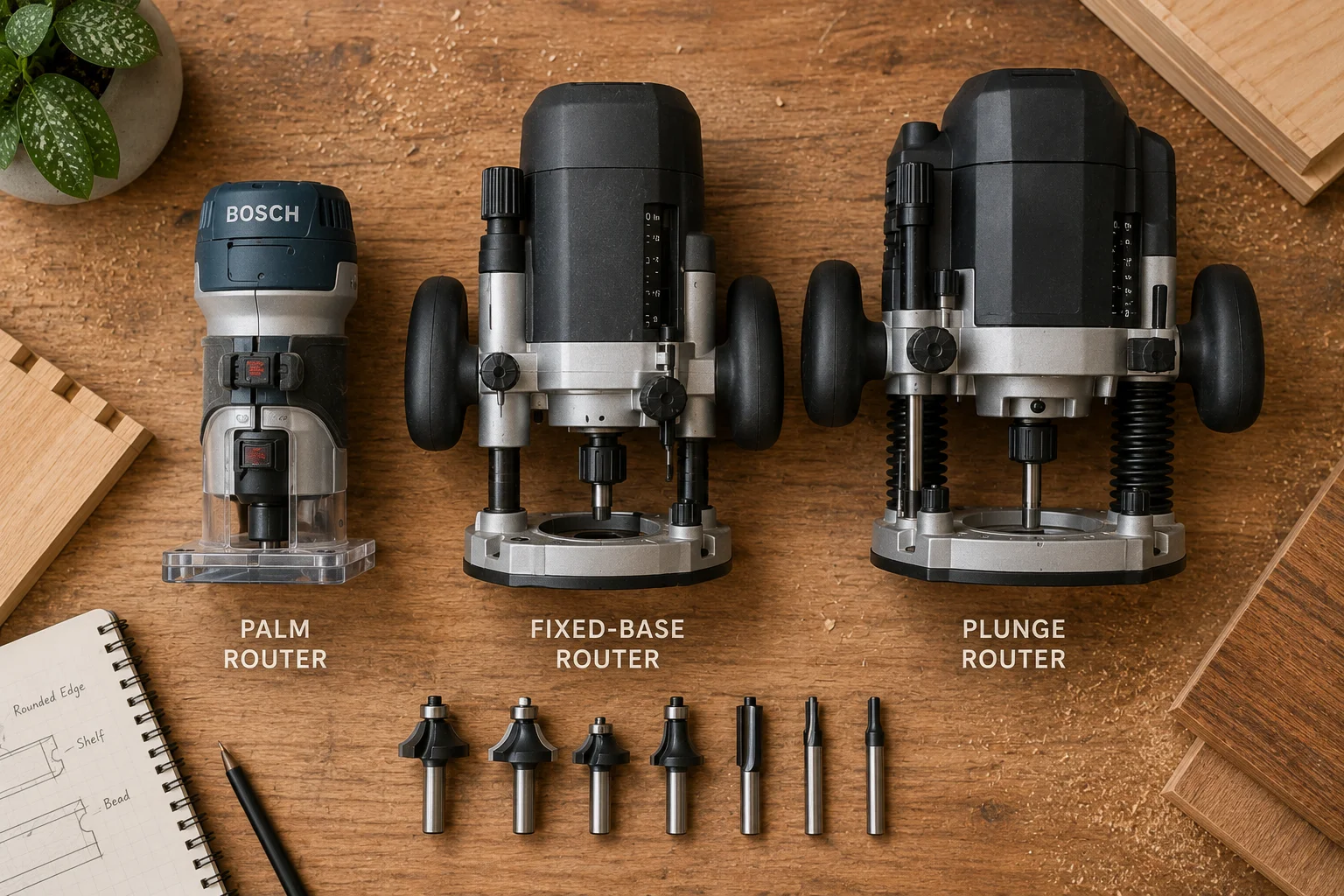
A fixed-base router maintains a selected cutting depth while you move the tool across the workpiece. It works especially well for edge profiles, straight grooves, template routing, and repeated cuts.
Choose a fixed-base router when most of your work begins at the edge of the material or when router-table compatibility is important.
A plunge router allows the spinning bit to begin above the workpiece before being lowered into the material. This makes it useful for mortises, stopped grooves, inlays, recesses, and cuts that begin away from an edge.
Useful plunge-base features include depth rods, adjustable stops, fine-depth controls, and a smooth plunging mechanism. These features can make multiple-pass routing easier to manage.
The additional mechanism usually makes a plunge router larger and heavier than a compact model. Still, it offers more flexibility for furniture and cabinet projects.
For many serious DIYers, a combo kit is the most versatile choice. It uses one router motor with interchangeable fixed and plunge bases.
This setup allows you to perform edge work with the fixed base and switch to the plunge base for mortises, grooves, and internal cuts. Current full-size combination systems may include variable speed, fine-depth adjustment, multiple collet sizes, and support for template guides or router tables.
A combo kit may cost more than a basic compact router, but it can reduce the need to buy two complete machines.
Different bits and materials may require different operating speeds. A variable-speed control lets you adjust the router to the task instead of running every bit at one fixed setting.
Some current routers offer broad speed ranges and electronic controls that help maintain speed while cutting.
A router motor can produce noticeable torque when switched on. Soft-start technology brings the motor up to speed more gradually, giving the user greater control during startup.
Check which bit sizes the router can accept. Compact routers often focus on 1/4-inch bits, while some full-size routers support both 1/4-inch and 1/2-inch collets.
A broader collet selection gives you access to more bit options, but you should only use bits and speeds approved for the router.
Look for a depth system that is easy to read, lock, and adjust. Fine-depth controls are valuable when a joint or decorative profile requires several gradual passes.
Routing creates chips and fine dust. A compatible dust port can improve visibility and reduce cleanup, although collection performance depends on the router, attachment, vacuum, and type of cut.
Cordless routers provide portability and are convenient for short tasks or work away from an outlet. Corded routers avoid battery interruptions and may be preferable for longer workshop sessions.
Consider which battery platform you already own before purchasing a cordless model.
A compact variable-speed router is a sensible first tool for beginners planning to make shelves, signs, small tables, or decorative furniture. It is easier to store and generally less intimidating than a full-size plunge router.
Choose a fixed-and-plunge combo kit when you expect to build cabinets, doors, tables, or other furniture requiring a wider range of cuts. It offers more room to develop your skills without immediately purchasing another router.
The best choice is not the router with the longest feature list. It is the one that matches the projects you will actually complete.
Always secure the workpiece and keep your hands away from the cutting area. Wear eye protection and use suitable dust collection or respiratory protection for the material and task.
Confirm that the bit is properly secured, suitable for the router, and operated within its approved speed range. OSHA identifies flying chips, incorrect feed direction, poorly secured workpieces, and improperly installed cutters as important router hazards.
Disconnect the router from its power source before changing bits or making adjustments. Wait until the bit stops completely before placing the tool on the workbench.
A router is most useful when you have clear projects that put its features to work.
Our Woodworking Plans e-book brings practical furniture, storage, décor, and home projects together in one organized resource. It includes step-by-step plans, measurements, material guidance, and useful building tips.
Use the e-book to choose projects suited to your current tools, practice new routing techniques, and spend less time searching through scattered instructions.
Explore our Woodworking Plans e-book and choose your next project today.
[Discover the Woodworking Plans E-Book]
The Best Router for Woodworking Projects depends on the type of work you plan to complete. Choose a compact router for portability and light edge work, a fixed-base router for consistent cuts, or a plunge router for mortises and internal grooves.
For maximum versatility, consider a variable-speed combo kit with both fixed and plunge bases. Match the router to your projects, confirm bit compatibility, and prioritize safe, controlled operation over unnecessary power.
A plunge router is more versatile for cuts that begin inside the workpiece. A fixed-base router is often simpler for edge profiles, templates, and router-table work.
A compact variable-speed router is suitable for many beginner projects. A full-size combination router is more appropriate when you expect to build cabinets or larger furniture.
Some fixed-base and combination routers support table mounting. Check the manufacturer’s specifications and make sure the router, base, plate, and table are compatible.
We’re here to help! Whether you need guidance on choosing the right plans or have questions about our recommendations, our team is ready to assist. Reach out anytime—your success is our priority.