Best Way to Sand Furniture Before Painting




Digitriserkamal
2 August 2026
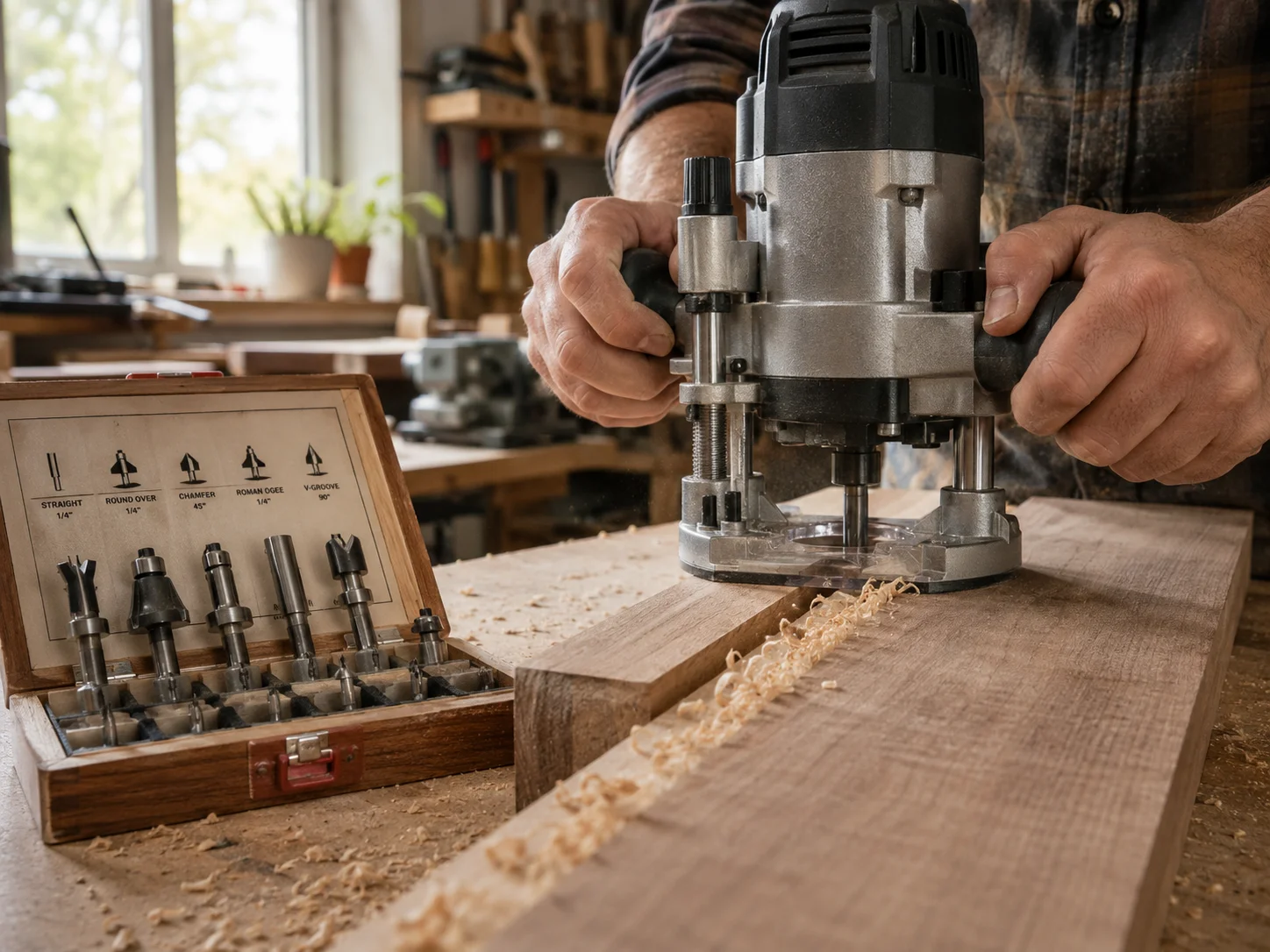
A router becomes far more useful when you understand the cutters that shape the wood. Different woodworking router bits create profiles, grooves, joints, and decorative details, so choosing the correct one can improve accuracy and finish quality.
You do not need a large collection to begin. A few versatile bits can handle shelves, cabinets, signs, tables, and many other DIY projects.
A router bit fits into the router’s collet and rotates to remove material. The shape of its cutting edge determines the profile left in the wood. Some bits cut through the middle of a board, while bearing-guided bits follow an edge or template.
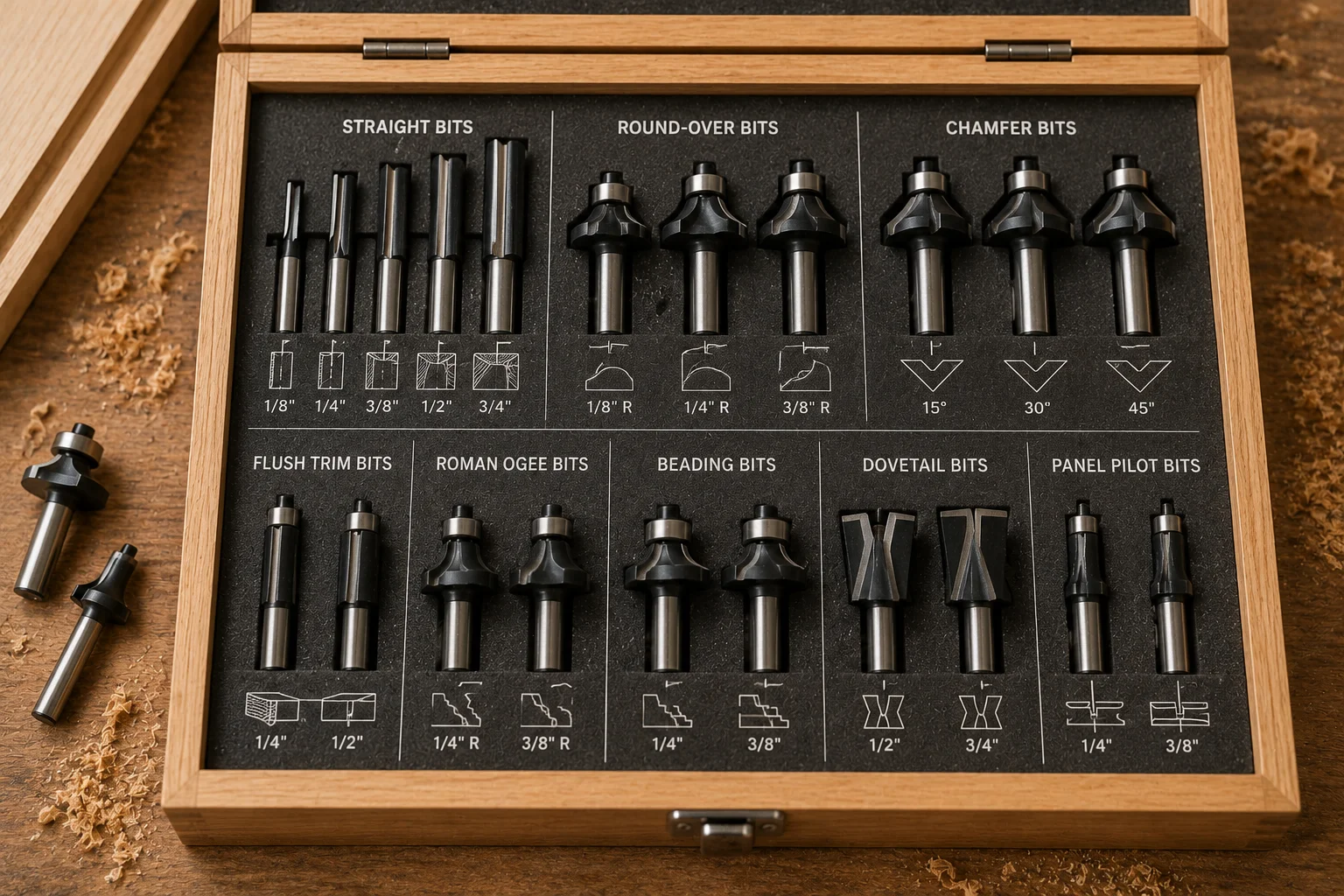
Common categories include straight cutting, trimming, joint making, edge forming, and decorative work. Manufacturers offer profiles such as straight, flush-trim, round-over, chamfer, dovetail, rabbeting, cove, and V-groove bits.
Straight bits create flat-bottomed grooves, dadoes, mortises, and recesses. They are among the most useful options for furniture and cabinet projects.
Use a fence, edge guide, or jig to control the cut. Several shallow passes are easier to manage than one aggressive pass.
A flush-trim bit uses a bearing to follow a template or existing edge. It can duplicate parts, trim laminate, or bring an oversized panel level with a frame.
The bearing may sit above or below the cutters. Choose the configuration that matches your template.
Round-over bits soften sharp edges on shelves, tabletops, benches, and cabinet parts. The bit’s radius determines the size of the curve.
A small radius creates a subtle edge, while a larger radius produces a more noticeable profile.
Chamfer bits cut a flat bevel along an edge. They work well for modern furniture, boxes, exposed corners, and decorative details.
Adjusting the cutting depth changes the width of the bevel.
A rabbeting bit creates a stepped recess along the edge of a board. Rabbets are commonly used for cabinet backs, frames, glass panels, and overlapping joints.
Some rabbeting bits use interchangeable bearings to change the cut width.
Dovetail bits cut angled profiles for drawer joints and sliding dovetails. They are normally used with a jig, fence, or template.
The bit angle and diameter must match the planned joint. Test the setup on scrap wood first.
Cove bits create a concave edge, while core box bits make rounded-bottom grooves. They are useful for trays, signs, decorative edges, and carved details.
Make gradual passes because these profiles may remove substantial material.
V-groove bits create angled channels for lettering, signs, decorative lines, and panel details. Deeper cuts create wider visible grooves.
Use a guide or template when consistent patterns are important. These straight, trimming, edge-forming, joint-making, and decorative applications reflect the standard categories used by woodworking-tool manufacturers.
Straight bits have cutting edges that run parallel to the shank. Spiral bits use helical cutters and are commonly available in up-cut, down-cut, and compression designs.
An up-cut bit moves chips upward and can help clear deeper grooves. A down-cut bit pushes chips and fibers downward, which may reduce upward tearing on the top surface. Compression bits combine up-cut and down-cut flutes to produce cleaner edges on both faces of suitable sheet materials.
Choose according to the material, required finish, router compatibility, and manufacturer’s instructions.
Router bits commonly use a 1/4-inch or 1/2-inch shank. Compact routers often accept 1/4-inch bits, while many full-size routers can use both sizes with the correct collet.
Larger shanks may provide more rigidity for demanding cuts, but compatibility comes first. Never force a bit into an incorrect collet or use an unapproved adapter. Bosch, for example, offers current bit sets in both 1/4-inch and 1/2-inch configurations.
A small starter set can be useful when it contains profiles you expect to use. Straight, flush-trim, round-over, chamfer, and rabbeting bits cover many beginner projects.
Large sets may include cutters that remain untouched. Buying individual bits for planned projects can offer better value than choosing a set only because it contains more pieces.
Inspect each bit before use. Do not use cutters with cracks, missing carbide, damaged bearings, or bent shanks. Confirm that the bit is secured correctly and suitable for the router’s permitted speed range.
OSHA identifies poorly fastened cutters, incorrect feed direction, flying chips, and kickback as significant router hazards. Secure the workpiece, wear eye protection, use dust collection when possible, and follow the instructions supplied with the router and bit.
Disconnect the router before changing cutters. Keep bits clean and store them so their cutting edges do not strike one another.
Understanding router bits becomes easier when you apply them to real projects. Our Woodworking Plans e-book brings furniture, storage, décor, and practical home builds together in one organized resource.
Inside, you will find step-by-step plans, measurements, material guidance, and useful building tips. Use it to select projects that match your tools and practice new techniques.
Explore our Woodworking Plans e-book and choose your next project today.
[Discover the Woodworking Plans E-Book]
Once woodworking router bits are explained by the cut they create, selecting the right one becomes simpler. Straight and spiral bits handle grooves, flush-trim bits follow templates, and round-over or chamfer bits shape exposed edges.
Start with a few versatile cutters, test each setup on scrap wood, and expand your collection as projects require it. A sharp, compatible bit is more valuable than a crowded box of unfamiliar profiles.
A straight bit, flush-trim bit, small round-over bit, chamfer bit, and rabbeting bit form a practical starter collection.
No. Large or specialized cutters may require a router table, a particular speed range, or a more powerful router. Always check the specifications for the bit and machine.
Burning can result from a dull or dirty bit, moving too slowly, taking an overly deep cut, or using an unsuitable speed. Stop and identify the cause before continuing.
We’re here to help! Whether you need guidance on choosing the right plans or have questions about our recommendations, our team is ready to assist. Reach out anytime—your success is our priority.