Best Way to Sand Furniture Before Painting




Digitriserkamal
3 August 2026
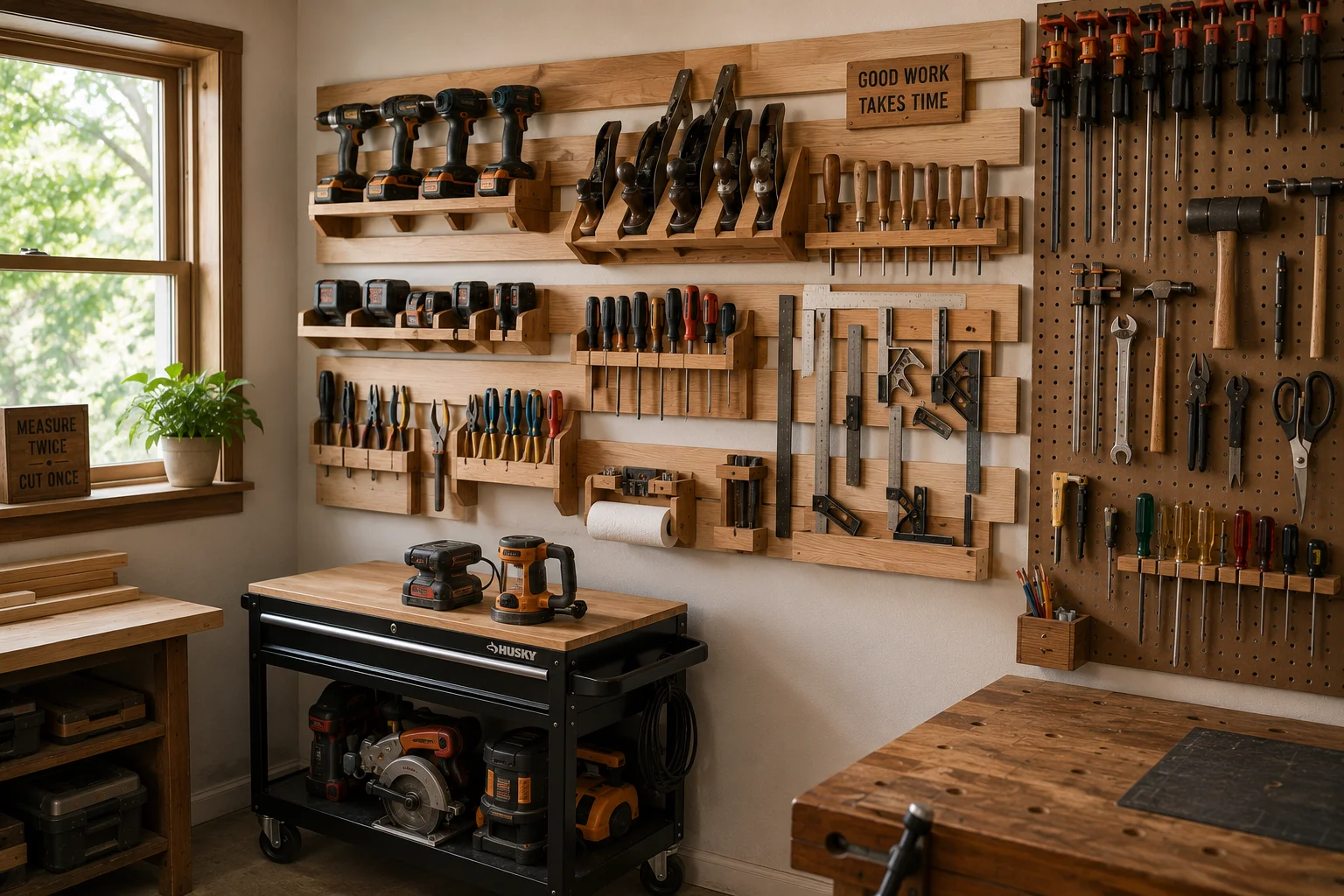
A workshop can feel crowded long before it is actually full. Tools disappear beneath project materials, clamps lean against every available wall, and small accessories migrate into mysterious corners. The right workshop tool storage ideas can recover that lost space and make every project easier to begin.
Good storage is not about hiding everything inside cabinets. It is about keeping frequently used tools visible, protecting equipment from damage, and using walls, corners, and spaces beneath work surfaces more effectively.
Before building shelves or buying containers, divide the workshop into activity zones. Common areas include cutting, assembly, sanding, finishing, and tool maintenance.
Store each tool near the place where you normally use it. Measuring tools may belong beside the workbench, while saw accessories should stay close to the cutting station. This reduces unnecessary movement and makes cleanup more intuitive.
Separate frequently used tools from occasional equipment. Everyday items should remain within easy reach, while seasonal tools and spare materials can occupy higher shelves or less accessible areas.
A French cleat system uses horizontal wooden strips with angled edges to support removable holders, shelves, and small cabinets.
Its main advantage is flexibility. You can create custom holders for drills, hand planes, clamps, measuring tools, and safety equipment, then rearrange them as your collection changes.
Install the cleats securely and distribute weight carefully. Heavier tools may require stronger holders and additional support.
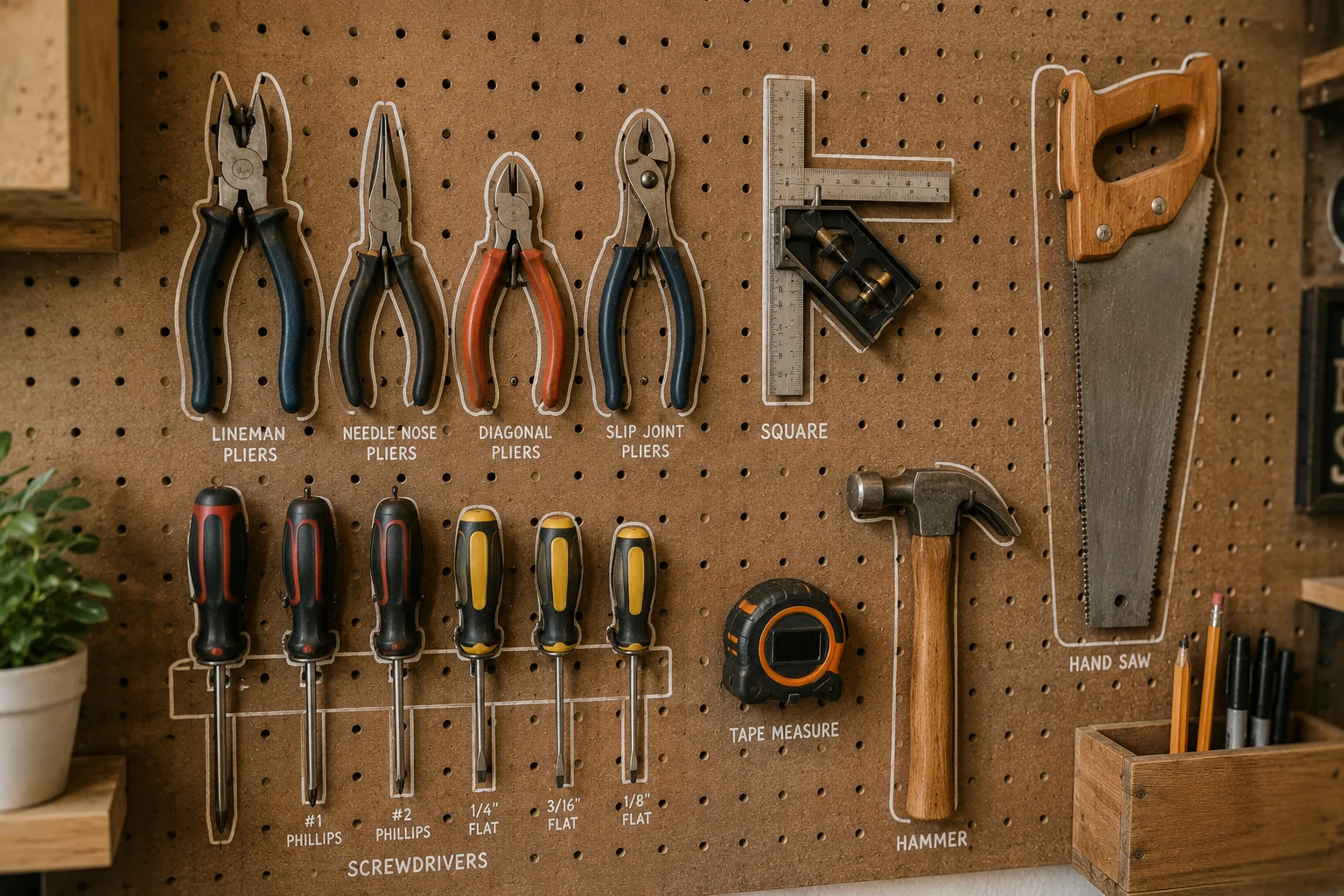
Pegboards keep frequently used hand tools visible without occupying a work surface. They work well for screwdrivers, pliers, squares, small saws, and sanding accessories.
Arrange tools according to function rather than simply filling every hook. Leave enough space to remove each item without disturbing the tools around it.
A painted outline or label can make it easier to return each tool to the correct position after use.
The space beneath a workbench is often underused. Shallow drawers can hold drill bits, router accessories, measuring tools, fasteners, and protective equipment.
Several shallow drawers are usually easier to organize than one deep compartment. Use dividers or removable trays to prevent small items from collecting in an untidy pile.
Make sure the drawers do not interfere with clamps, vises, or comfortable seating at the bench.
A rolling cart can store power tools while doubling as a temporary work surface. It is especially helpful in a garage or multipurpose room where the workshop must be rearranged regularly.
Add shelves or compartments for drills, sanders, routers, and their accessories. Locking casters can help keep the cart stable during use.
Design the cart around the dimensions of your existing tools rather than using generic shelf spacing.
Short boards and offcuts can consume large amounts of floor space when stacked horizontally. A vertical rack keeps them contained and makes individual pieces easier to inspect.
Sort lumber by length or material type. Place longer boards against secure supports and use dividers to prevent pieces from falling sideways.
Discard scraps that are too small or damaged to be useful. Storing every offcut can quietly turn a workshop into a wooden archive of good intentions.
Ceiling-mounted racks can hold lightweight materials, long clamps, seasonal supplies, or rarely used equipment.
Keep overhead storage away from doors, lights, and working areas where items could become obstacles. Avoid storing objects that are difficult to lift safely.
Clearly label containers viewed from below so you do not need to open several boxes to find one accessory.
Screws, washers, hinges, brackets, and other hardware quickly create clutter when mixed together. Clear drawers or stackable bins make small parts easier to identify.
Label each compartment by size and type. Keep the most frequently used fasteners near the assembly area and store specialty hardware separately.
Avoid overfilling containers. A storage system is less useful when opening one drawer causes a metallic avalanche.
Cordless tool batteries and chargers can occupy valuable bench space. A wall-mounted charging station keeps them organized and creates one dedicated location for power management.
Include shelves for chargers, slots for batteries, and holders for compatible tools. Route cables neatly and keep ventilation openings unobstructed.
Follow the storage and charging instructions provided by the battery and tool manufacturers.
Clamps are awkward because they are long, heavy, and available in many shapes. A wall-mounted rack can hold bar clamps vertically, while smaller spring clamps may fit on a simple horizontal rail.
Place clamp storage close to the assembly bench. Arrange heavier clamps lower on the wall and avoid overloading a single bracket.
Leaving a little extra capacity allows the system to accommodate future purchases without immediate rebuilding.
A workshop changes as your skills, projects, and tools develop. Permanent cabinets may look tidy, but adjustable shelves, modular cleats, and mobile carts are easier to modify.
Do not design every compartment around one exact tool unless you expect to keep it for many years. Flexible storage prevents the workshop from becoming obsolete each time your equipment changes.
Review the layout periodically. Tools that are rarely used can move to secondary storage, creating space for equipment involved in current projects.
An organized workshop makes building easier, but a clear project plan gives every tool and storage system a purpose.
Our Woodworking Plans e-book brings practical furniture, workshop storage, home organization, and décor projects together in one convenient resource. It includes step-by-step plans, measurements, material guidance, and useful building tips.
Use the e-book to improve your workspace, explore new projects, and spend less time searching through disconnected instructions.
Explore our Woodworking Plans e-book and choose your next workshop project today.
[Discover the Woodworking Plans E-Book]
Effective workshop tool storage ideas use more than cabinets and shelves. French cleat walls, pegboards, mobile carts, vertical lumber racks, under-bench drawers, and organized small-parts bins can make a compact workshop feel considerably more functional.
Begin with the tools you use most, move storage onto the walls, and leave room for your setup to evolve. A well-organized workshop saves space, reduces interruptions, and helps each project start with a clear bench rather than an excavation.
A combination of wall-mounted storage, under-bench drawers, and mobile carts works well because it uses vertical space while keeping the layout flexible.
Store power tools in dry, accessible locations where cords, batteries, and accessories can remain organized. Follow the manufacturer’s storage recommendations.
Pegboards are convenient for lightweight hand tools. French cleat systems can support larger custom holders and are easier to rearrange as storage needs change.
We’re here to help! Whether you need guidance on choosing the right plans or have questions about our recommendations, our team is ready to assist. Reach out anytime—your success is our priority.